
Daria Koshkina: The Art in Data
By Alixandra Rutnik on Nov 03, 2025
YOUR COMMUNITY. YOUR CLUB. BECOME A MEMBER TODAY.
The One Club community is filled with super talented and extraordinary individuals. So to conclude 2025, we are taking the time to highlight a handful of our members, get to know them a little better, and understand why they love being a part of the club. We are hoping their stories inspire you to create great work and get excited to become a member yourself.
Daria Koshkina, originally from Moscow, Russia, is now a Boston-based One Club member and data visualization artist. Daria served on our One Screen jury in 2024, and on our Young Ones jury earlier this year. We discussed her jury experience, industry change, and her favorite ad of all time.
When did you first become acquainted with The One Club?
One of my first jobs was an internship at an advertising agency. My successful colleague was involved in the One Club community. I left advertising, but years later stumbled upon The One Club again and decided I wanted to be involved, too. I've since participated on the One Screen and Young Ones juries.

What did you enjoy about the One Screen jury experience?
It is a big responsibility to be on a jury. For creatives worldwide it is an opportunity to be seen and celebrated. The creative industry is a grind, and many of us work hard for years without the visibility we deserve. Choosing which projects should be highlighted is a serious commitment.
It was a privilege to see the unique work of emerging and established talent. I watched a lot of tragic, funny, and witty short films.
Being a data viz person, I created a metric with several 10-point criterias, such as storytelling, shooting quality, actors' play quality, and direction, to weigh the score for each film. I made other criterias for Young Ones. The score of each parameter contributed to the final 10-point score. Of course emotional response matters deeply in creative work, but I think it is critical to be objective and look at the level of production, VFX, and story writing with a cold head.
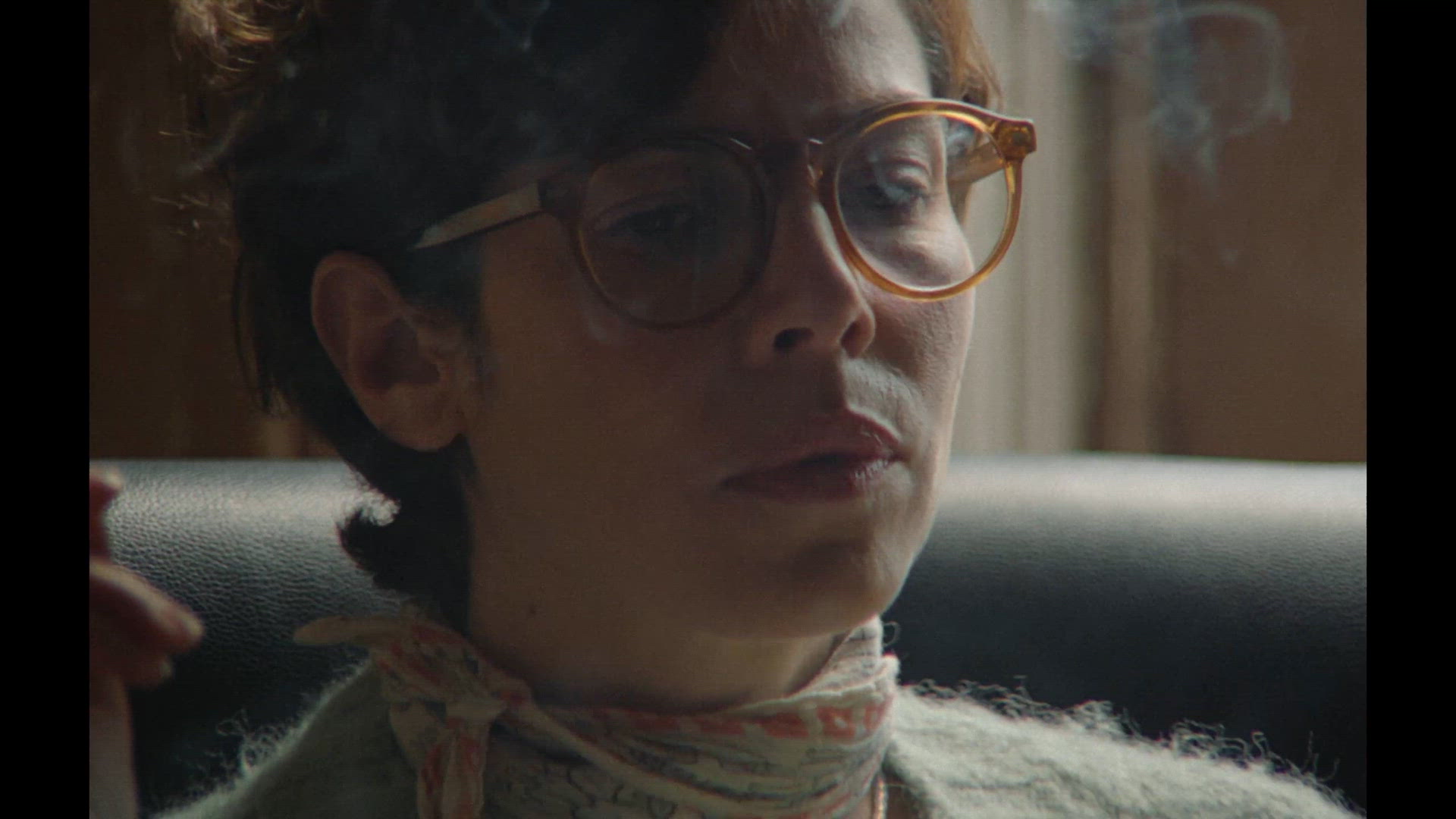
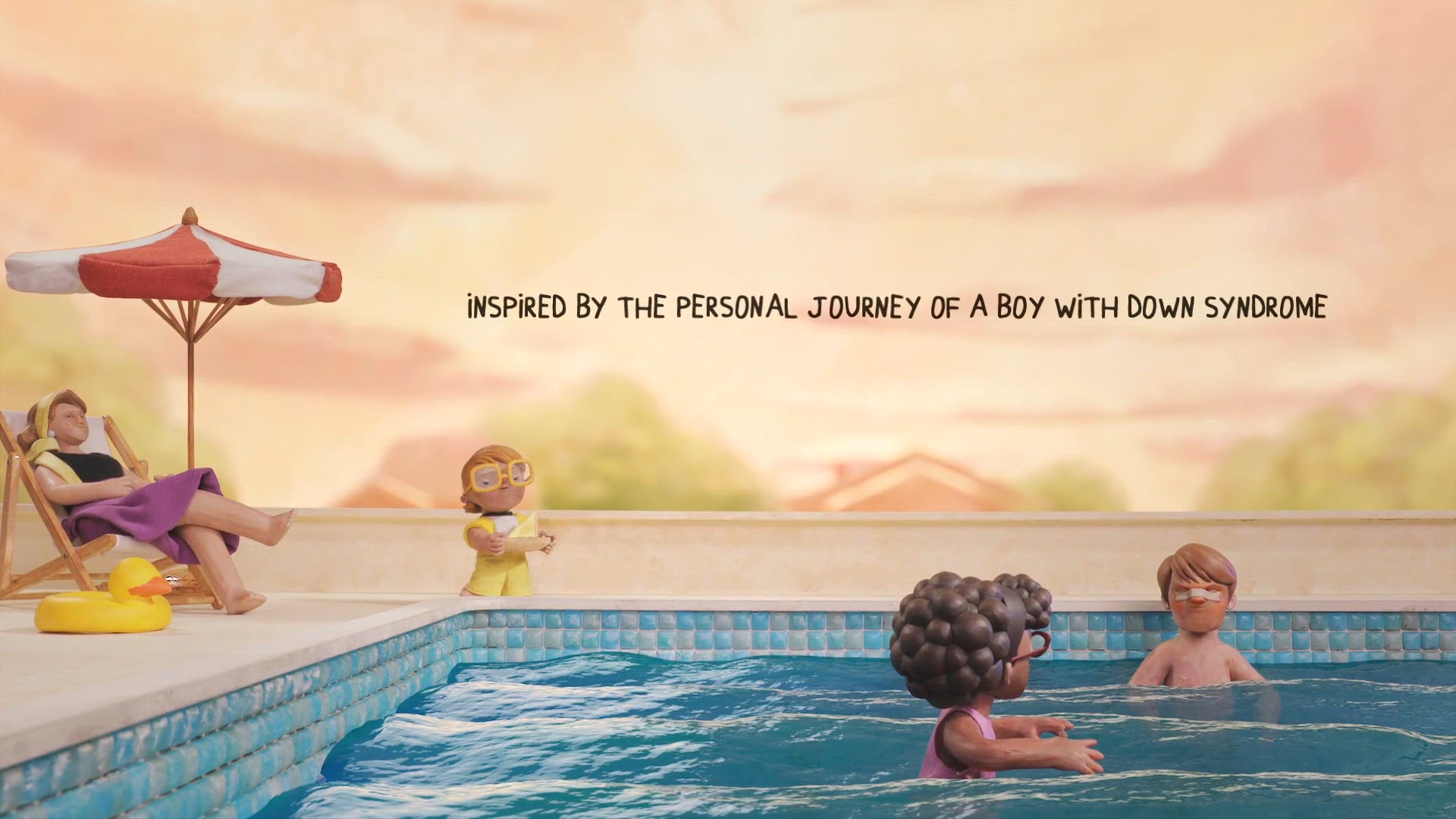
The movies that stood out to me: The Mark on the Wall, 47, Living from Work, The Last Barf Bag, and The First Speech. I loved a movie that did not win, which was about a girl who spends time with her father and they have a real-life conversation. It was beautiful and touching.
What about the Young Ones jury experience?
It gave me another angle on the ideas circulating across creative disciplines and industries. I saw work from a lot of different fields and how emerging talent find novel approaches to visual language and social innovation. Judging a competitive award means you see hundreds of works. Not only do you have to see them, but also you have to analyze each of them. Jurying enriched my understanding of the different opinions and communication strategies on topics such as identity, belonging, data, society and climate shift, and safety and emerging technologies.
In what ways did participating on these juries provide value to you?
At the beginning of my career, I was not winning any awards. I struggled to be seen. It was a discouraging experience for several years. So I know very well that when your career is taking a rough turn it is hard to keep believing in your creativity and its value. It is unclear how to move forward or why things are not working the way we wished they would. It happens. You just keep going and cherish the creative core of your being, which is not the job title or the fancy project, but your way of living and seeing challenges.
After years of hard work, I suddenly started being seen, winning something, understanding how to better apply to awards and opportunities. It comes. Having this experience, I wanted to support young creatives. I wanted to provide fair and compassionate jury decisions and support work with potential.
This is what early career years are about - experimenting, making mistakes and reflecting. Doing daring, imperfect, honest work. Trying things that no one has tried before, then starting from scratch. Save work. Because those drafts may not win gold, but in five years they may be found in a old sketchbook in a dusty box and turn out to be a powerful statement that feels fresh. And then they win gold.
Now that you live in Boston, whta do you love about it?
Since Boston is near the Atlantic Ocean, I can smell the salty ocean in the breeze when I wake up, even though I can’t see the water from my house. I love the feeling of having the ocean nearby. We have some of the best universities in the world here, which makes this city a hub of extraordinary people from all over. I love having friends from many places and different walks of life. We also have very random weather patterns, so when I look out the window and attempt to plan what to wear, I’ll see one person in shorts and a hoodie, another in a full winter outfit, someone in pumps and a mini skirt, and someone in slops. I never can get it right. It’s fun.

What motivates you to complete challenging projects?
I try to align my projects with my bigger life goals, passions, and desired growth trajectories. Every challenging project is a teacher. Sometimes, it’s a good project to put in a portfolio. Sometimes, it may teach hard or soft skills. And sometimes, it will teach you when to quit.
Naturally, I am afraid of challenges. They make me anxious. But when I started learning code and had to crack the homework to graduate (luckily, there was no AI), I realized that completing a challenge gives me a nice feeling. It is a skill that can be learned.
When I need an inspirational kick, I travel, and explore biology, art, beautiful books, museums, engineering, fashion, and spend time with people. And when I totally struggle to find motivation and inspiration, I imagine myself as a game character. I know if I complete the game, I’ll get a lot of experience, maybe some rare items, and +10 to my dexterity, which is always helpful.
“When I totally struggle to find motivation and inspiration, I imagine myself as a game character. I know if I complete the game, I’ll get a lot of experience, maybe some rare items, and +10 to my dexterity, which is always helpful.”
How do you approach a creative project from scratch?
First, I read the brief carefully and make a schedule. Then, I do primary research – field work. I go to museums, I talk to people, I explore places, and I observe situations. I create project folders with meaningful names. I take notes and make project progress presentations.
Then, I do secondary research – read books, search for related research and projects, interesting tools, contextual references, etc. These two stages fill my mind with as much information about the topic as possible. Then, I let it all sink in and give my ideas space to grow. I switch to other projects or life stuff. After a short while, I come back to it and outline several solutions and draft an execution plan. Or sometimes ideas pop up and compel me to get back to the project urgently.
The next step is execution. I prefer to start projects early, because sometimes solutions will emerge naturally. Good sleep solves a lot of things. The first step of a creative process often involves sketching, searching for materials, drafting, and researching tools, unless it’s somehow perfect from the very first sketch, and I feel there is nothing to add.
The second stage of execution is decision-making – which road to take? I had a project where we decided to do qualitative research before answering this question. When the decision making is done, I work on the execution. And when that’s done, I share the project with the world, submit it to awards, and connect with people.
I also incorporated sports, a healthy diet, and a good night sleep in my life around six years ago, which gives me energy and helps me be more creative. Currently, I am very against all-nighters, and believe it makes my work worse.

How do you feel about professional creative awards?
Hosting and judging creative awards is a big responsibility and a lot of work. It is important to remember that awards only highlight some of the talented people out there.
I grew up thinking I was not the person who won prizes from cereal box promotional contests. This is definitely not a growth mindset. Maybe it is a cereal mindset. Nevertheless, I made it on the Information Is Beautiful Longlist this year, for which I am very grateful.
I also have a message. Dear competitors, please-please-please read the award requirements. First of all, there will be fewer broken hearts this way. Secondly, sometimes really talented designers misread the rules, and senior creatives apply to contests for students or recent graduates. It adds hours of hard work for judges and awards teams. And in the worst-case scenario, if someone older and more experienced wins a contest for students, it takes a crucial opportunity away from them. It also distorts students’ understanding of their progress in a destructive way. They may assume they are not good enough. But they just need one or two more years to be this good and this experienced. It is very important to give everyone a fair chance according to their career stage.
What is your favorite ad of all time?
I have to confess that this is the one. I’m not sure how this Geico ad represents me, and I don't even want to know.
If you could give a younger you a piece of advice, what would it be?
If I were to meet a younger me and change the course of my actions, the current me probably wouldn’t exist. They did it in Back To The Future, and we all saw how much trouble it is to mess with the past. This is why I think the only me to give advice is the current me, because there is nothing in the past I can change – and also it made me this dude who is now entitled to give (sometimes unprovoked) advice.
What has changed about yourself in the last five years?
Probably trillions of cells in my body replaced themselves, and I didn’t even notice. Every 10-15 years, our body cells and tissues replace themselves, which freaks me out. I am more or less the same brain in a totally new body. Like those Futurama heads.
In five years, I’ve changed almost everything – the country where I live, the industry where I work, the way I see the world, and the community I surround myself with. Immigration was one of the best decisions of my life, the one that my heart longed for, and it changed me for the better. My relationship with my partner also taught me many things, which changed my perspective on love. I also became a bit more morbid in a healthy way because I started thinking that my time is limited, and what I do with it really matters.
What’s the most significant change you’ve seen in the advertising and design industry since you started?
That some things didn’t change. Illustrator is still here. I’m grateful Blender is here, too. Comic Sans is still an underdog. We still use grids, gestalt principles, and color theory.
Yet everything, even about those things, has changed. Now, illustrator is a very different tool because of AI. Blender is used in science and data visualization. Comic Sans is now a post ironic underdog. The things we convey with gestalt principles and color theory are more informed by accessibility principles, and a growing body of research on HCI. We still use grids, yeah. This one is pretty stable.
The shift in technologies has changed the tone of design. However, I am surprised the distrust toward design has not changed, even though design is a very subtle mix of art, intuition, and business. Some of the best design projects are not only KPI oriented but also intuition-driven because design attracts people.
The Yves Saint Laurent logo was more memorable when it had a soul. It is sad that when it comes to strategic decision-making, designers still have to fight that they actually know what they are doing. Natasha Jen wrote a great article about this topic — that design learned the business language, but did business learn the language of design? Good design is truly more than efficacy.

How do you balance creativity with data in your work?
There is no dichotomy for me. They are just different types of creativity. I am currently taking a data science course, and it takes a lot of creative energy to comprehend the math landscape – it is a different way of working with space. You can’t fix unreliable, biased data with a beautiful picture.
What’s a small thing that always makes you happy?
I recently downloaded an emotion tracker called How You Feel, and as it turns out I don’t feel happy very often. I see happiness as a huge, tasty pie consisting of many small, sweet moments and good emotions. For me, feeling alive, blessed, loved, encouraged, hopeful, thankful, accomplished, and excited is more natural. Those emotions are ingredients in my happiness pie.
I feel happy when everything in the moment feels that it should be this way. I feel very happy when I am connected to myself. Maybe not happy-happy like 2000s smile icons, but happy to live the life I have, as imperfect as it might be. Happiness is a long-term project, and I am grateful I had today to work on it.
“Happiness is a long-term project, and I am grateful I had today to work on it.”
YOUR COMMUNITY. YOUR CLUB. BECOME A MEMBER TODAY.
BECOME A MEMBER TODAY! Submit your work!