ADC Awards
ADC Annual Awards is the oldest continuously running industry award show in the world, with an incredible legacy of over 100 years. These awards celebrate the very best in advertising, digital media, graphic and publication design, packaging and product design, motion, experiential and spatial design, photography, illustration and fashion design – all with a focus on artistry and craftsmanship.

Category
Design for Good / Product Design
Annual ID
ADC103_PRD016B
About the Work
Background:
Although Scallops are the most commonly eaten shellfish in Japan, they are also the most discarded shellfish.
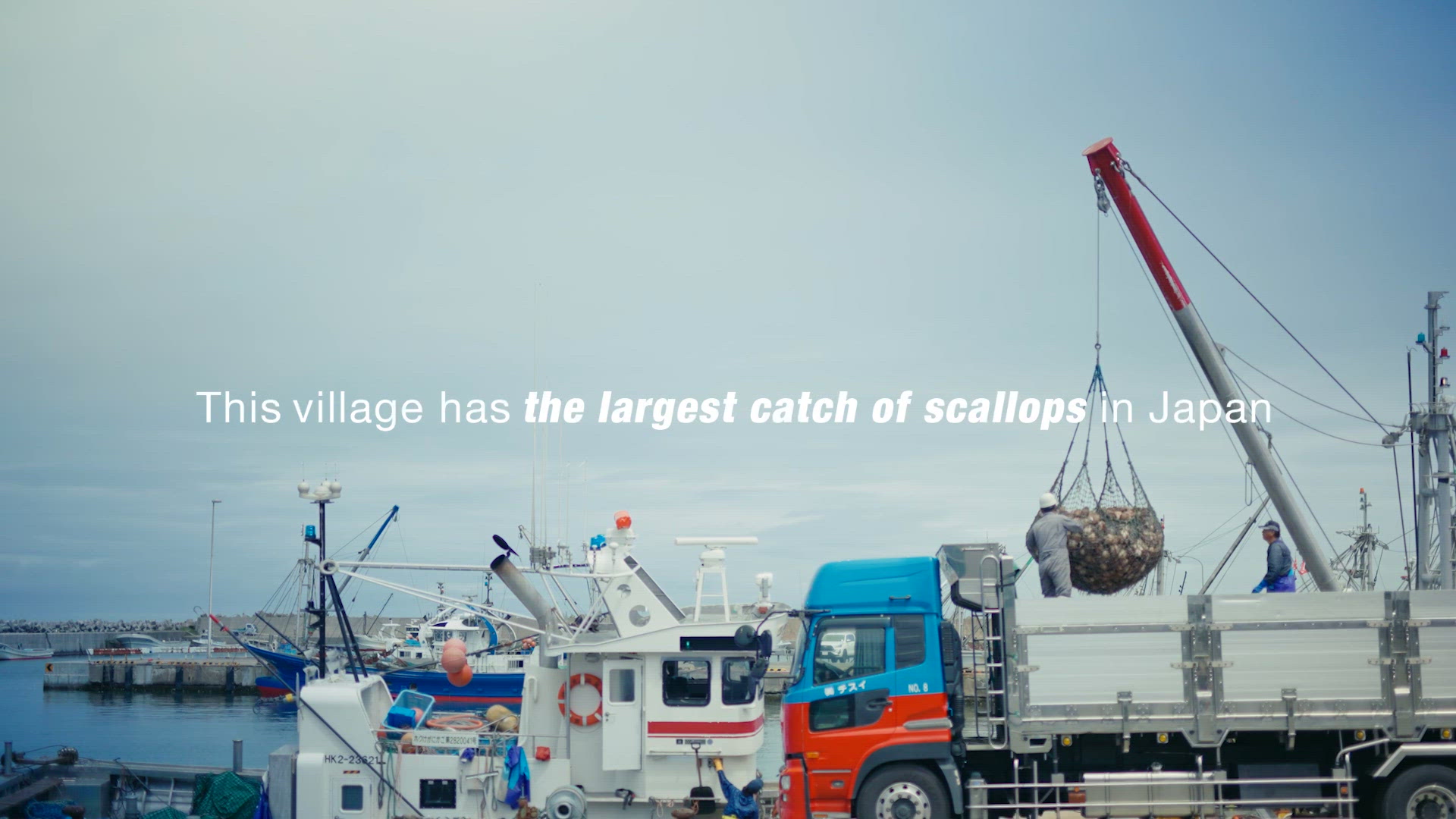
Hokkaido's Sarufutsu Village is home to the largest scallop catch in the country. In 2021, exporters discarded approximately 40,000 tons of shells on the shoreline.
Experts point out not only the challenge of securing a place to deposit shells, but also an environmental preservation issue as piles of shells omit a foul odor, and cause groundwater contamination from heavy metals contained in the remains.
We aimed to transform discarded shells into a new resource to empower the community.
Idea:
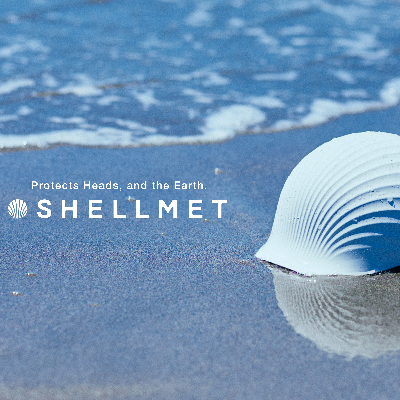
SHELLMET, the world's first helmet made from scallop shells.
"Shells have protected themselves from external enemies and are now protecting human lives."
SHELLMET is made of 100% recycled materials from crushed discarded shells, reducing CO2 emissions by up to 36% compared to plastic.
The application of natural structures to technological development is called "Biomimicry".
SHELLMET is based on this concept and incorporates a ribbed structure unique to shells. As a result, it succeeded in yielding 133% strength compared to a regular helmet.
We aim to create a sustainable society by recycling SHELLMETs, crushing and reusing them for new materials once their intended use is complete.
*We collaborate with clients from idea generation to design and PR.
Impact:
Received 887 media exposures in 34 countries, reaching 5.6 billion eyeballs.
Penetration not just among local communities, but throughout Japan.
Chalked up 1,397% ($37,000+) of sales in 2 months after launch.
In first year, over 24 tons of discarded shells are to be recycled.
In recognition of its innovation, it was adopted as the official helmet for the 2025 Osaka World Expo.
This material, a plastic alternative, is gaining global attention, with collaborations from over 24 brands.
It's used in Camper's buttons and ANA's in-flight items.
Although Scallops are the most commonly eaten shellfish in Japan, they are also the most discarded shellfish.
Hokkaido's Sarufutsu Village is home to the largest scallop catch in the country. In 2021, exporters discarded approximately 40,000 tons of shells on the shoreline.
Experts point out not only the challenge of securing a place to deposit shells, but also an environmental preservation issue as piles of shells omit a foul odor, and cause groundwater contamination from heavy metals contained in the remains.
We aimed to transform discarded shells into a new resource to empower the community.
Idea:
SHELLMET, the world's first helmet made from scallop shells.
"Shells have protected themselves from external enemies and are now protecting human lives."
SHELLMET is made of 100% recycled materials from crushed discarded shells, reducing CO2 emissions by up to 36% compared to plastic.
The application of natural structures to technological development is called "Biomimicry".
SHELLMET is based on this concept and incorporates a ribbed structure unique to shells. As a result, it succeeded in yielding 133% strength compared to a regular helmet.
We aim to create a sustainable society by recycling SHELLMETs, crushing and reusing them for new materials once their intended use is complete.
*We collaborate with clients from idea generation to design and PR.
Impact:
Received 887 media exposures in 34 countries, reaching 5.6 billion eyeballs.
Penetration not just among local communities, but throughout Japan.
Chalked up 1,397% ($37,000+) of sales in 2 months after launch.
In first year, over 24 tons of discarded shells are to be recycled.
In recognition of its innovation, it was adopted as the official helmet for the 2025 Osaka World Expo.
This material, a plastic alternative, is gaining global attention, with collaborations from over 24 brands.
It's used in Camper's buttons and ANA's in-flight items.
2024 Awards
Total Points: 9

Bronze Cube
Credits
Agency
TBWA\HAKUHODO Inc. / TOKYO
Production Company
Robot Communications Inc. / Tokyo
Art Director
Takeshi Matsuda
Chief Creative Officer
Takahiro Hosoda
Group Creative Director
Masatoshi Usami
Designer
Hajime Sunada
Hisahiro Tomonaga
Director
Kohei Inoue
Editor
Nobuo Mita
Motion Designer
Kiyotaka Sumiyoshi
Photographer
Junya Taguchi
Producer
Yuki Sakamoto
Product Designer
Shintaro Monden
Senior Art Director
Yuhei Ito
3D Engineer
Minatsu Takekoshi
Business Producer
Takayuki Kashiwazaki
Challender
Joel Challender
Head of Digital
Yoshiki Okayasu
PR Planner
Kyosuke Hashimoto
Suguru Kato
Promoter
Eri Sato
Takashi Hamada
Retoucher
Takumu Koshiba
Senior Business Director
Hiroaki Wada
Startup Studio
quantum Inc. / Tokyo
Transcreator
Eric Ellefsen
Joel Challender
Jonathan Genki Fujimura
Yuri Hatanaka
Related Awards