ADC Awards
ADC Annual Awards is the oldest continuously running industry award show in the world, with an incredible legacy of over 100 years. These awards celebrate the very best in advertising, digital media, graphic and publication design, packaging and product design, motion, experiential and spatial design, photography, illustration and fashion design – all with a focus on artistry and craftsmanship.
Category
Brand / Communication Design / Product Design
Annual ID
ADC105_HTW022M
Background
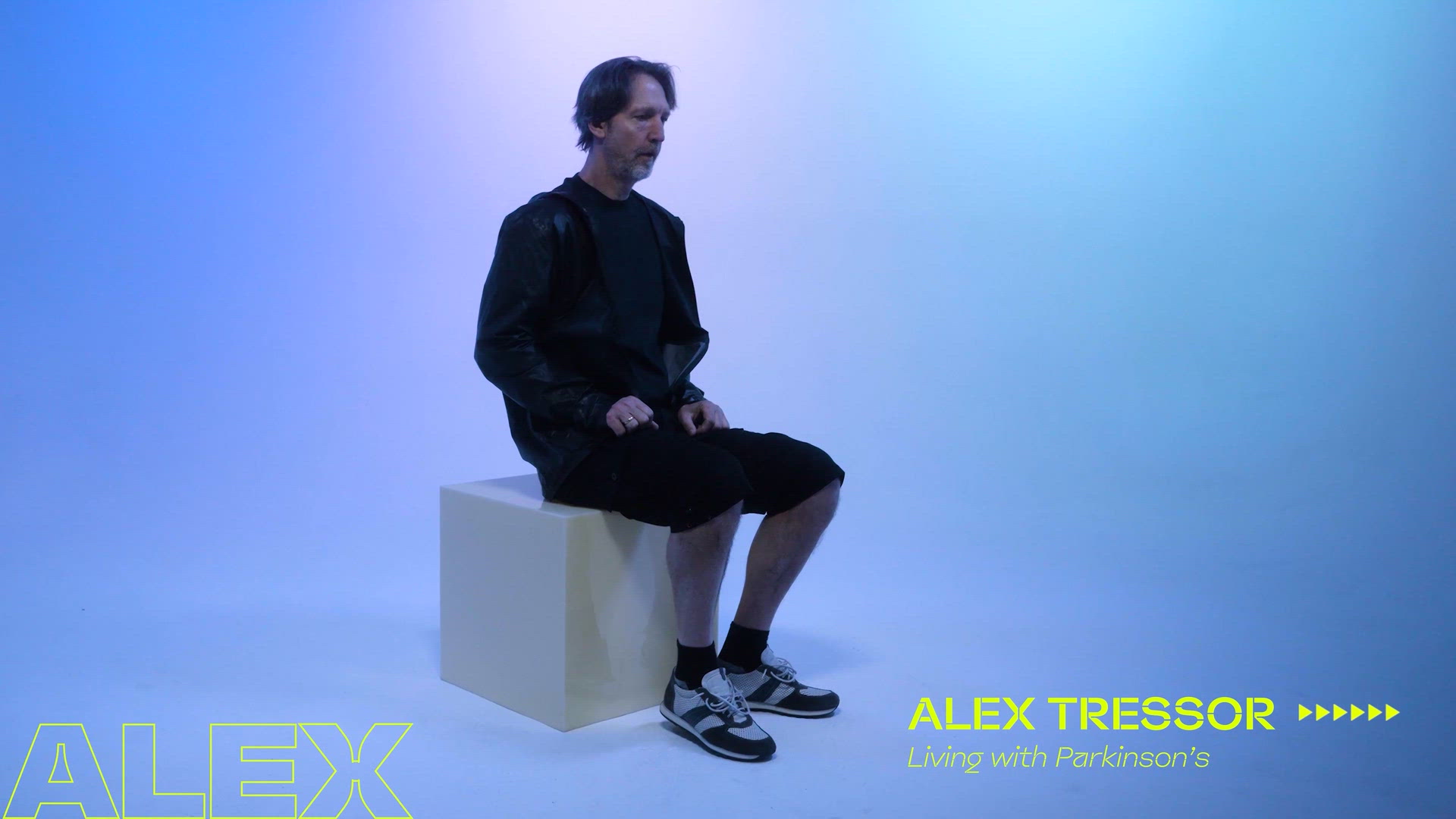
Freezing of gait is one of the most dangerous and underserved symptoms of Parkinson’s disease. For millions of people, it can abruptly stop movement without warning, increasing the risk of falls and dramatically limiting independence. Despite its prevalence, innovation in this space has lagged—often constrained by cost, complexity, and proprietary medical-device models.
GoBoot was created to change that. In partnership with the Parkinson’s Wellness Project, engineers, doctors, designers, and people living with Parkinson’s came together to develop a new kind of mobility solution—one that could meaningfully help patients without relying on traditional commercial infrastructure.
The challenge was not just to create a functional device, but to rethink how accessibility innovation happens. The goal was to build something powerful, scalable, and radically accessible—designed to address a real problem and spark progress across the Parkinson’s community.
GoBoot was created to change that. In partnership with the Parkinson’s Wellness Project, engineers, doctors, designers, and people living with Parkinson’s came together to develop a new kind of mobility solution—one that could meaningfully help patients without relying on traditional commercial infrastructure.
The challenge was not just to create a functional device, but to rethink how accessibility innovation happens. The goal was to build something powerful, scalable, and radically accessible—designed to address a real problem and spark progress across the Parkinson’s community.
Creative Idea
The creative idea behind GoBoot was accessibility at every level—physical, emotional, and technological.
Rather than positioning the boot as a closed, proprietary product, GoBoot was designed as an open-source platform: a breakthrough mobility solution anyone could build, adapt, and improve. The idea reframed assistive technology not as a finished object, but as a starting point for global collaboration.
Creatively, the work focused on possibility. It showed how advanced technology—Functional Electrical Stimulation, step-sensing, and wireless systems—could be integrated into something familiar and wearable, transforming cutting-edge science into everyday empowerment.
GoBoot wasn’t just introduced as a device. It was launched as an invitation: to researchers, designers, and innovators to help fight freezing of gait together.
Rather than positioning the boot as a closed, proprietary product, GoBoot was designed as an open-source platform: a breakthrough mobility solution anyone could build, adapt, and improve. The idea reframed assistive technology not as a finished object, but as a starting point for global collaboration.
Creatively, the work focused on possibility. It showed how advanced technology—Functional Electrical Stimulation, step-sensing, and wireless systems—could be integrated into something familiar and wearable, transforming cutting-edge science into everyday empowerment.
GoBoot wasn’t just introduced as a device. It was launched as an invitation: to researchers, designers, and innovators to help fight freezing of gait together.
Insights & Strategy
The key insight was that the biggest barrier to progress in Parkinson’s mobility isn’t technology—it’s access. Existing solutions are often expensive, intimidating, or locked behind proprietary systems that limit scale and innovation.
The strategy was to remove those barriers entirely. By making GoBoot open-source, the project bypassed traditional medical-device constraints and invited the global scientific and design community to participate.
Another critical insight was that patients don’t need incremental improvements—they need solutions that restore confidence and independence. GoBoot’s design focused on real-world usability, integrating advanced therapy directly into footwear people could actually wear.
The strategy positioned GoBoot not as a one-off invention, but as a catalyst, designed to accelerate innovation, empower patients, and reimagine what accessible design can achieve.
The strategy was to remove those barriers entirely. By making GoBoot open-source, the project bypassed traditional medical-device constraints and invited the global scientific and design community to participate.
Another critical insight was that patients don’t need incremental improvements—they need solutions that restore confidence and independence. GoBoot’s design focused on real-world usability, integrating advanced therapy directly into footwear people could actually wear.
The strategy positioned GoBoot not as a one-off invention, but as a catalyst, designed to accelerate innovation, empower patients, and reimagine what accessible design can achieve.
Execution
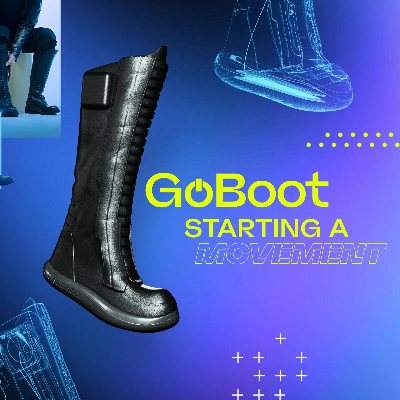
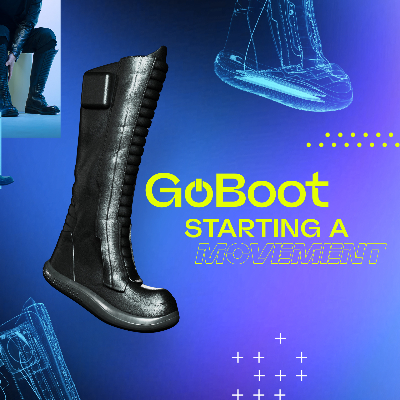
GoBoot was executed as both a technological breakthrough and a public resource. The boot integrates Functional Electrical Stimulation into lightweight footwear with intuitive step-sensing, wireless charging, and a supportive sole—making advanced therapy wearable and practical.
The launch included a hero film and digital hub that explained the problem of freezing of gait, demonstrated the technology, and made the open-source blueprint publicly available. Every execution reinforced the same idea: this technology is meant to be shared.
The work spoke directly to multiple audiences: patients seeking solutions, clinicians evaluating legitimacy, and researchers looking to build on the technology. By pairing futuristic design with radical openness, the execution positioned GoBoot as a new model for how accessible innovation can be developed and distributed
The launch included a hero film and digital hub that explained the problem of freezing of gait, demonstrated the technology, and made the open-source blueprint publicly available. Every execution reinforced the same idea: this technology is meant to be shared.
The work spoke directly to multiple audiences: patients seeking solutions, clinicians evaluating legitimacy, and researchers looking to build on the technology. By pairing futuristic design with radical openness, the execution positioned GoBoot as a new model for how accessible innovation can be developed and distributed
Results
GoBoot generated immediate interest across patient, clinical, and research communities. Early users experienced noticeable improvements in mobility, while experts described the technology as transformative for addressing freezing of gait.
The open-source release sparked engagement, with experts discussing how the system could be adapted, scaled, and evolved. Organizations and individuals of a regional Parkinson’s event responded positively to the project’s mission-driven approach, helping elevate awareness around a symptom often overlooked in Parkinson’s innovation.
Beyond individual outcomes, GoBoot succeeded in reframing what accessibility innovation can look like—proving that advanced, life-changing technology doesn’t have to be locked behind commercial barriers.
By launching not just a device, but a platform for progress, GoBoot helped move the conversation—and the field—forward.
The open-source release sparked engagement, with experts discussing how the system could be adapted, scaled, and evolved. Organizations and individuals of a regional Parkinson’s event responded positively to the project’s mission-driven approach, helping elevate awareness around a symptom often overlooked in Parkinson’s innovation.
Beyond individual outcomes, GoBoot succeeded in reframing what accessibility innovation can look like—proving that advanced, life-changing technology doesn’t have to be locked behind commercial barriers.
By launching not just a device, but a platform for progress, GoBoot helped move the conversation—and the field—forward.
2026 Awards
Total Points: 3
Merit Honor
Credits
Agency
Remedy Edge (formerly Patients & Purpose) / New York
Client / Brand
Parkinsons Wellness Project / Suffern
Chief Creative Officer
Dina Peck
Director and CCO
Susan Lust
Senior Art Director
Catelyn Manansala
SVP, Group Creative Director
Tyler Maxson
Associate Partner, Group Creative Director
Tom Galati
Copy Supervisor
Wade Burton
Senior Video Editor
Nate Platzner
VP Associate Creative Director
Michelle Leone
VP, Copy Supervisor
Martin Kearton
Related Awards