ONE Asia Creative Awards
ONE Asia Creative Awards celebrates the best creative work of the year from the Asia Pacific region. Formerly known as the One Show Greater China Awards, which was founded in 2014 by The One Club for Creativity, the awards were established because of the tremendous growth and evolution of creativity in the Asia Pacific market. It presents an unparalleled level of prestige and honor for creatives, designers and innovators in the region. The awards are a fusion of culture where East meets West that brings the creativity of the region to the global stage.

Category
Pop Culture - Fandom & Subculture
Annual ID
OA25_CIM006B
Background
The Challenge
The Bangkok International Motor Show is the most crowded stage for automakers in Thailand. Every brand arrives with new models, technology showcases and aggressive offers, all competing for the same spotlight.
The Problem
For Mercedes-Benz, the difficulty was how to draw attention in an environment where every brand is fighting to stand out, while also finding a way to remain memorable in a setting that happens every year.
Cultural Background
Thailand has a long-standing tradition of giving nicknames that reflect personality, aspiration or cultural values. Some are playful, some are quirky, and many are borrowed from well-known brands. Among them, “Benz” has become one of the most iconic. Parents choose it as a way of expressing their admiration for Mercedes-Benz, passing on the prestige and aspiration attached to the brand through a child’s everyday identity.
Over time, this naming practice has created a cultural phenomenon that resembles a fan club of its own. The individuals featured in the documentary all shared that Mercedes-Benz is their dream car, making them fans of the brand just like their parents who gave them the name. What began as a personal act of admiration has grown into a generational community bound by a shared symbol. Unlike other brand-inspired nicknames that fade with time, “Benz” has endured for decades, becoming a subculture of pride that reflects how deeply Mercedes-Benz is woven into Thai life as both cultural symbol and personal identity.
The Bangkok International Motor Show is the most crowded stage for automakers in Thailand. Every brand arrives with new models, technology showcases and aggressive offers, all competing for the same spotlight.
The Problem
For Mercedes-Benz, the difficulty was how to draw attention in an environment where every brand is fighting to stand out, while also finding a way to remain memorable in a setting that happens every year.
Cultural Background
Thailand has a long-standing tradition of giving nicknames that reflect personality, aspiration or cultural values. Some are playful, some are quirky, and many are borrowed from well-known brands. Among them, “Benz” has become one of the most iconic. Parents choose it as a way of expressing their admiration for Mercedes-Benz, passing on the prestige and aspiration attached to the brand through a child’s everyday identity.
Over time, this naming practice has created a cultural phenomenon that resembles a fan club of its own. The individuals featured in the documentary all shared that Mercedes-Benz is their dream car, making them fans of the brand just like their parents who gave them the name. What began as a personal act of admiration has grown into a generational community bound by a shared symbol. Unlike other brand-inspired nicknames that fade with time, “Benz” has endured for decades, becoming a subculture of pride that reflects how deeply Mercedes-Benz is woven into Thai life as both cultural symbol and personal identity.
Creative Idea
At the Bangkok International Motor Show, every automaker tries to capture attention with louder displays, sharper promotions, and bigger promises. Mercedes-Benz chose a different path, grounded not in competition but in culture. The belief was simple: the brand already lived inside Thai society in a way no other carmaker could claim, through the nickname “Benz.”
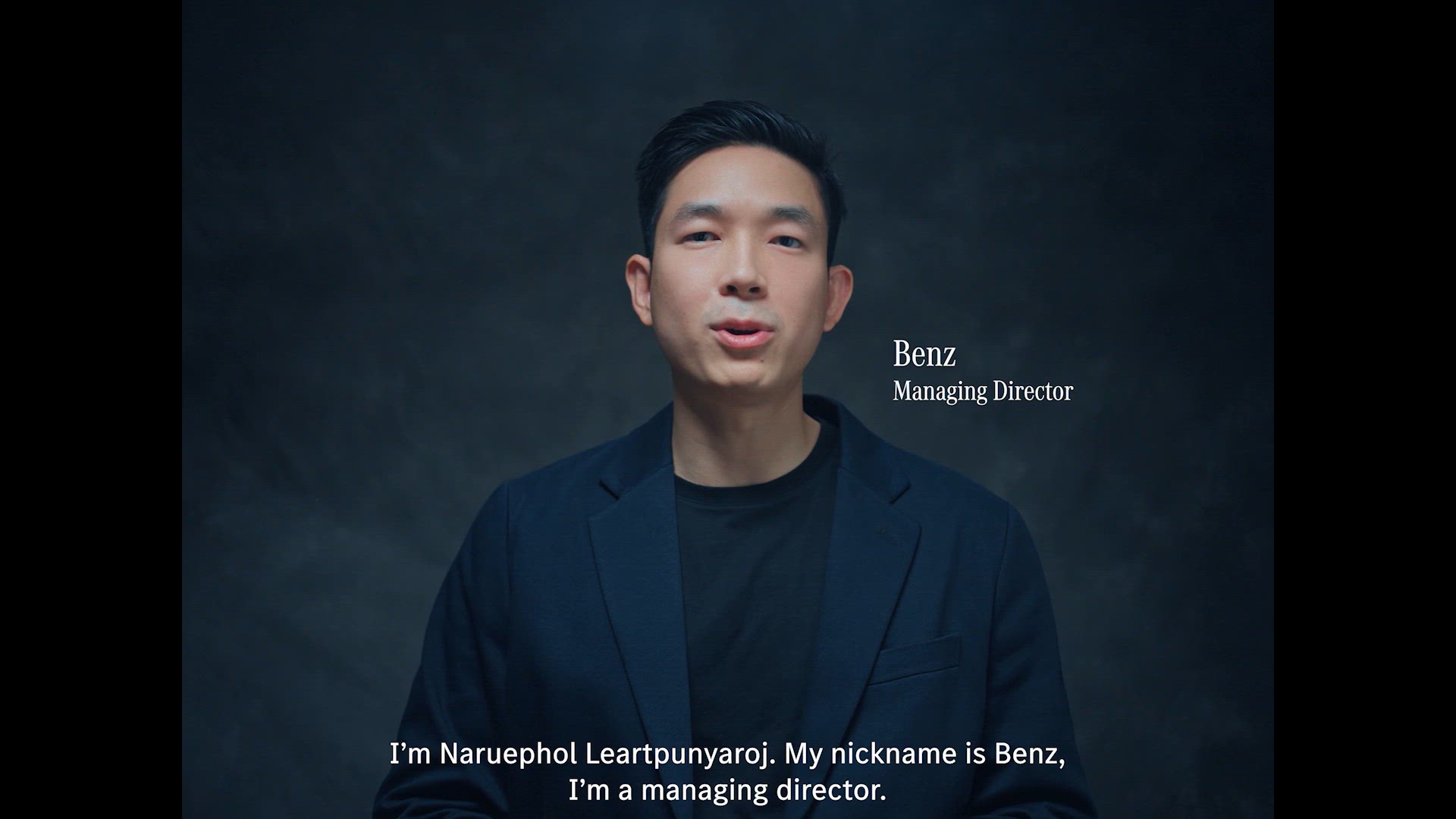
The idea was to hold up that truth and make it visible. By bringing together people named Benz in a documentary, we recognised them as a community that carried the brand in their identity. Their stories showed how admiration for Mercedes-Benz had been passed from parents who gave them the name to children who grew up dreaming of owning the car. What might look like coincidence was, in fact, a generational form of fandom.
The thinking extended further: if these individuals embodied the brand in name and aspiration, then they could also be the ones to invite others to the Motor Show. Turning each of them into a brand ambassador reframed the invitation itself, from a brand’s marketing push into a personal gesture from true fans of the name.
The creative leap was to shift the Motor Show away from product noise and toward cultural celebration. A familiar nickname became proof of Mercedes-Benz’s place in Thai popular culture, and fandom itself became the idea
The idea was to hold up that truth and make it visible. By bringing together people named Benz in a documentary, we recognised them as a community that carried the brand in their identity. Their stories showed how admiration for Mercedes-Benz had been passed from parents who gave them the name to children who grew up dreaming of owning the car. What might look like coincidence was, in fact, a generational form of fandom.
The thinking extended further: if these individuals embodied the brand in name and aspiration, then they could also be the ones to invite others to the Motor Show. Turning each of them into a brand ambassador reframed the invitation itself, from a brand’s marketing push into a personal gesture from true fans of the name.
The creative leap was to shift the Motor Show away from product noise and toward cultural celebration. A familiar nickname became proof of Mercedes-Benz’s place in Thai popular culture, and fandom itself became the idea
Insights & Strategy
The starting point was recognising that competing on product features at the Motor Show would not create meaningful distinction. Every automaker arrives with similar promises of performance, technology and design. The real opportunity lay outside the booth, in culture.
The key insight was that in Thailand, Mercedes-Benz is not only admired but embedded in everyday identity through the nickname “Benz.” Parents naming their children Benz are making a choice that reflects a deep admiration commonly seen in fandom. Over time, this practice has created a generational form of fandom, where the name itself has become a symbol of aspiration and pride.
The strategy was to turn that cultural phenomenon into the campaign itself. By bringing together people named Benz and sharing their stories, the work revealed how Mercedes-Benz already lives in Thai society as more than a car brand. These individuals were then positioned as ambassadors, carrying the message outward through their own networks.
Instead of pushing louder promotions, Mercedes-Benz leveraged an authentic piece of popular culture and reframed it as proof of belonging. This approach not only stood out at the Motor Show, but also strengthened the brand’s emotional and aspirational connection with Thai audiences by celebrating the fandom that already existed around its name.
The key insight was that in Thailand, Mercedes-Benz is not only admired but embedded in everyday identity through the nickname “Benz.” Parents naming their children Benz are making a choice that reflects a deep admiration commonly seen in fandom. Over time, this practice has created a generational form of fandom, where the name itself has become a symbol of aspiration and pride.
The strategy was to turn that cultural phenomenon into the campaign itself. By bringing together people named Benz and sharing their stories, the work revealed how Mercedes-Benz already lives in Thai society as more than a car brand. These individuals were then positioned as ambassadors, carrying the message outward through their own networks.
Instead of pushing louder promotions, Mercedes-Benz leveraged an authentic piece of popular culture and reframed it as proof of belonging. This approach not only stood out at the Motor Show, but also strengthened the brand’s emotional and aspirational connection with Thai audiences by celebrating the fandom that already existed around its name.
Execution
The work was crafted to feel less like advertising and more like cultural storytelling. The centre piece was a documentary film that brought together people named Benz and gave them a national stage. Its tone was heartfelt and authentic, capturing personal stories that revealed how a nickname can hold aspiration, pride and generational devotion to the brand.
The film was released on social platforms where cultural conversations already happen, allowing it to spread organically through shares, tags and personal anecdotes. Its documentary style invited participation rather than promotion, encouraging audiences to see themselves and their friends in the story.
To extend the idea, each individual featured in the film was turned into a brand ambassador. They were given a personalised QR code that linked directly to ticket redemption for the Motor Show. An invitation from a Benz was not a marketing push but a gesture from someone whose very name embodied the brand, making the pass to the event feel both personal and cultural.
Craft was critical. The stories were told with restraint, letting authenticity carry the weight rather than product shots or technical showcases. The placement and execution allowed Mercedes-Benz to stand apart at the Motor Show not by being louder, but by being truer. The event was transformed from a battle of features into a cultural celebration of fandom.
The film was released on social platforms where cultural conversations already happen, allowing it to spread organically through shares, tags and personal anecdotes. Its documentary style invited participation rather than promotion, encouraging audiences to see themselves and their friends in the story.
To extend the idea, each individual featured in the film was turned into a brand ambassador. They were given a personalised QR code that linked directly to ticket redemption for the Motor Show. An invitation from a Benz was not a marketing push but a gesture from someone whose very name embodied the brand, making the pass to the event feel both personal and cultural.
Craft was critical. The stories were told with restraint, letting authenticity carry the weight rather than product shots or technical showcases. The placement and execution allowed Mercedes-Benz to stand apart at the Motor Show not by being louder, but by being truer. The event was transformed from a battle of features into a cultural celebration of fandom.
Results
The campaign quickly broke through cultural and media clutter, turning a familiar nickname into a national conversation. The documentary film reached more than 2 million views within the first 48 hours and went on to generate over 4 million views overall. Engagement followed, with more than 330,000 people reacting, sharing and tagging their own friends and family named Benz.
The mechanic of personalised QR codes amplified participation further, directly linking invitations to ticket redemption for the Motor Show and driving a 500 percent increase in leads compared to the previous year.
At the Motor Show itself, Mercedes-Benz recorded its highest luxury car sales in three years. Beyond business results, the campaign reinforced the brand’s cultural position in Thailand, showing how a nickname rooted in aspiration could become proof of Mercedes-Benz’s place in popular culture.
The mechanic of personalised QR codes amplified participation further, directly linking invitations to ticket redemption for the Motor Show and driving a 500 percent increase in leads compared to the previous year.
At the Motor Show itself, Mercedes-Benz recorded its highest luxury car sales in three years. Beyond business results, the campaign reinforced the brand’s cultural position in Thailand, showing how a nickname rooted in aspiration could become proof of Mercedes-Benz’s place in popular culture.
2025 Awards
Total Points: 6
Bronze Award
Credits
Agency
BBDO Bangkok / Bangkok
Production Company
Salmon House / Bangkok
Art Director
Peera Liangjai
Thasorn Boonyanate
Chief Creative Officer
Thasorn Boonyanate
Copywriter
Prame Poosoontornsri
Thasorn Boonyanate
Creative Director
Pratchya Vilaipol
Thasorn Boonyanate
Executive Creative Director
Thasorn Boonyanate
Film Director
Thanachart (Benz) Siripatrachai
Producer
Paramee Soontornwuttinun
Account Director
Anna Chuapramong
Account Executive
Thanyamas Chanchaiwat
Business Director
Arunee Rueangwattanaporn
Sirimanat Runghirunsku
Project Manager
Kanokwan Kaewkern
Related Awards