ONE Asia Creative Awards
ONE Asia Creative Awards celebrates the best creative work of the year from the Asia Pacific region. Formerly known as the One Show Greater China Awards, which was founded in 2014 by The One Club for Creativity, the awards were established because of the tremendous growth and evolution of creativity in the Asia Pacific market. It presents an unparalleled level of prestige and honor for creatives, designers and innovators in the region. The awards are a fusion of culture where East meets West that brings the creativity of the region to the global stage.

Category
Data for Good
Annual ID
OA25_CUD001G
Background
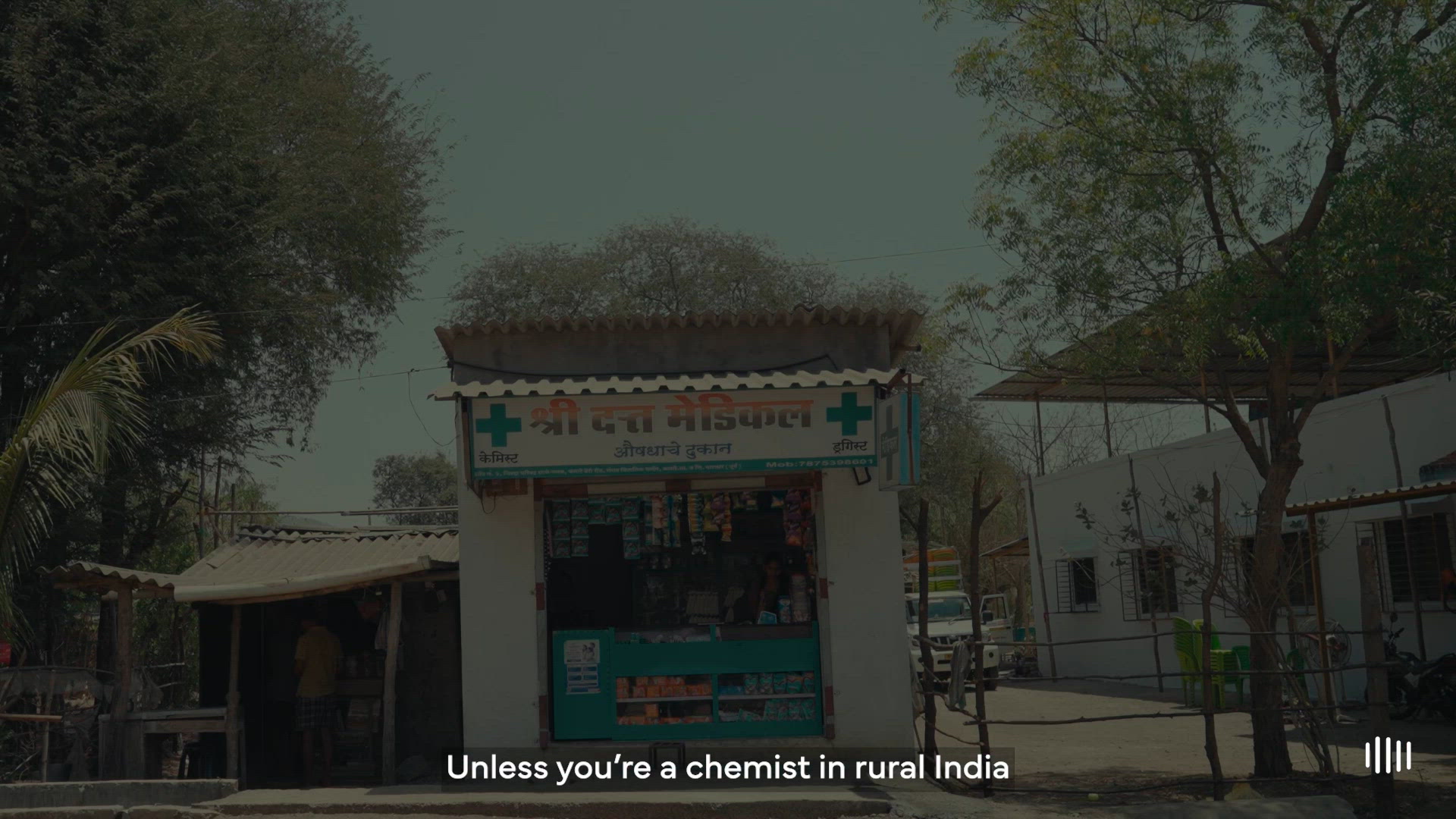
In rural India, the role of a chemist extends far beyond dispensing medicine — they are often the community’s first and only point of medical contact. Yet, with just one trained chemist for every 4000 people (versus the WHO-recommended 1:1000), the system is critically under-resourced. In this fragile ecosystem, an illegible prescription is not a minor inconvenience; it can become a catalyst for life-threatening errors, contributing to India’s 5.8 million annual deaths from medical mistakes.
The brief was clear: How can Alkem move beyond product marketing to create a tangible healthcare impact at scale?
The opportunity lay at the intersection of a real human need (chemists forced to ‘guess’ prescriptions), a technological inflection point (rising AI accessibility), and a policy tailwind (national rural health initiatives).
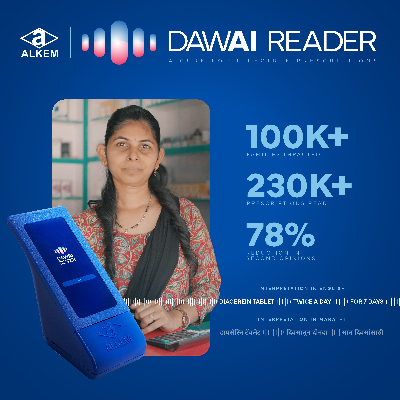
In response, Alkem launched DawAI Reader, an AI-powered device tailored specifically for rural chemists. Trained on thousands of real-world prescriptions, DawAI leverages custom OCR, Fuzzy Logic, and contextual analysis to decode drug names and dosages — reading them aloud in local languages like Marathi, Hindi, Malayalam, and English.
Piloted across 250+ villages, DawAI empowered over 100,000 families, turning chemists from passive dispensers into confident healthcare enablers.
In a category where loyalty is traditionally built through margin games, Alkem chose a radically different path, building brand trust by solving a systemic healthcare gap.
DawAI isn’t just a product innovation. It’s a brand redefining its role, from pharmaceutical provider to healthcare catalyst for rural India.
The brief was clear: How can Alkem move beyond product marketing to create a tangible healthcare impact at scale?
The opportunity lay at the intersection of a real human need (chemists forced to ‘guess’ prescriptions), a technological inflection point (rising AI accessibility), and a policy tailwind (national rural health initiatives).
In response, Alkem launched DawAI Reader, an AI-powered device tailored specifically for rural chemists. Trained on thousands of real-world prescriptions, DawAI leverages custom OCR, Fuzzy Logic, and contextual analysis to decode drug names and dosages — reading them aloud in local languages like Marathi, Hindi, Malayalam, and English.
Piloted across 250+ villages, DawAI empowered over 100,000 families, turning chemists from passive dispensers into confident healthcare enablers.
In a category where loyalty is traditionally built through margin games, Alkem chose a radically different path, building brand trust by solving a systemic healthcare gap.
DawAI isn’t just a product innovation. It’s a brand redefining its role, from pharmaceutical provider to healthcare catalyst for rural India.
Creative Idea
In rural India, illegible prescriptions aren't just a frustration, they're a crisis, causing widespread medical errors. With only one trained chemist for every 4000 people, and little access to digital tools, rural pharmacies were forced to guess critical healthcare decisions. To solve this, Alkem developed DawAI Reader: an AI-powered device designed specifically to decode handwritten prescriptions and read them aloud in regional languages.
The creative challenge lay in building complex AI technology into a simple, affordable, and trustworthy tool for digitally unskilled chemists. Convincing pharmacists to adopt it in a low-tech environment was equally critical.
The DawAI Reader successfully met its objectives: empowering chemists, improving prescription accuracy, and strengthening Alkem’s reputation in rural healthcare. The pilot reached 100,000 families across 250 villages, winning endorsement from chemists and healthcare associations alike, proving technology could bridge one of India's oldest, deadliest healthcare gaps.
The creative challenge lay in building complex AI technology into a simple, affordable, and trustworthy tool for digitally unskilled chemists. Convincing pharmacists to adopt it in a low-tech environment was equally critical.
The DawAI Reader successfully met its objectives: empowering chemists, improving prescription accuracy, and strengthening Alkem’s reputation in rural healthcare. The pilot reached 100,000 families across 250 villages, winning endorsement from chemists and healthcare associations alike, proving technology could bridge one of India's oldest, deadliest healthcare gaps.
Insights & Strategy
In rural India, 1 trained chemist serves nearly 4000 people — four times the WHO recommendation. Lack of digitisation, illegible prescriptions, and the critical role of chemists as frontline health workers highlighted a hidden crisis contributing to millions of preventable medical errors annually.
APPROACH:
We couldn’t instantly solve the shortage of trained professionals. But we could empower existing chemists with a tool built for their reality — not urban assumptions. One that respects their judgment, speaks their language, and solves the illegible prescription problem without needing complex infrastructure.
EXECUTION:
We developed The DawAI Reader (The Prescription Box) — a custom OCR and Fuzzy Logic-powered AI device that reads illegible prescriptions and verbalises dosage and medicine names in local languages. A technology designed to work where healthcare infrastructure is fragile, it helped chemists become trusted providers and positioned Alkem as a catalyst for safer healthcare in rural India.
APPROACH:
We couldn’t instantly solve the shortage of trained professionals. But we could empower existing chemists with a tool built for their reality — not urban assumptions. One that respects their judgment, speaks their language, and solves the illegible prescription problem without needing complex infrastructure.
EXECUTION:
We developed The DawAI Reader (The Prescription Box) — a custom OCR and Fuzzy Logic-powered AI device that reads illegible prescriptions and verbalises dosage and medicine names in local languages. A technology designed to work where healthcare infrastructure is fragile, it helped chemists become trusted providers and positioned Alkem as a catalyst for safer healthcare in rural India.
Execution
Implementation:
The DawAI Reader (The Prescription Box) was built through a collaboration between AI engineers, healthcare strategists, and rural deployment specialists over 14 months. Custom OCR models were trained specifically on doctor handwriting samples sourced from across India. The device was engineered to decode prescriptions, use Fuzzy Logic for error correction, and read out medicine names and dosages in multiple regional languages.
Timeline:
Pilot launched in February 2025.
Placement:
Deployed across 250 villages in Maharashtra via direct-to-chemist training programs. Chemists were provided devices through pharma network partnerships, ensuring immediate on-ground adoption.
Scale:
The pilot impacted 100,000 families, winning endorsement from key pharmaceutical associations. Based on its success, the DawAI Reader is being scaled to reach over 663,000 villages across India, aiming to transform last-mile healthcare delivery where trained chemists are scarce.
The DawAI Reader (The Prescription Box) was built through a collaboration between AI engineers, healthcare strategists, and rural deployment specialists over 14 months. Custom OCR models were trained specifically on doctor handwriting samples sourced from across India. The device was engineered to decode prescriptions, use Fuzzy Logic for error correction, and read out medicine names and dosages in multiple regional languages.
Timeline:
Pilot launched in February 2025.
Placement:
Deployed across 250 villages in Maharashtra via direct-to-chemist training programs. Chemists were provided devices through pharma network partnerships, ensuring immediate on-ground adoption.
Scale:
The pilot impacted 100,000 families, winning endorsement from key pharmaceutical associations. Based on its success, the DawAI Reader is being scaled to reach over 663,000 villages across India, aiming to transform last-mile healthcare delivery where trained chemists are scarce.
Results
The DawAI Reader (The Prescription Box) directly impacted how rural chemists operate and how they’re perceived. In pilot areas, 78% reported reduced reliance on second opinions. 62% reported an increase in repeat patient visits. These aren’t just usage stats, they indicate rising trust at the last mile of healthcare.
For Alkem, this created reputational value beyond its product portfolio. The device positioned the company as an enabler of frontline care, not just a pharmaceutical supplier.
Importantly, this wasn’t driven by marketing. There was no paid media. No trade push. And yet, hundreds of pharmacies outside the pilot zones requested access to the device, based purely on word-of-mouth and impact.
In a highly commoditised category, DawAI Reader gave Alkem a distinct positioning: a healthcare-first company solving for systemic gaps with scalable tech. This is how utility became credibility, and credibility became brand equity.
For Alkem, this created reputational value beyond its product portfolio. The device positioned the company as an enabler of frontline care, not just a pharmaceutical supplier.
Importantly, this wasn’t driven by marketing. There was no paid media. No trade push. And yet, hundreds of pharmacies outside the pilot zones requested access to the device, based purely on word-of-mouth and impact.
In a highly commoditised category, DawAI Reader gave Alkem a distinct positioning: a healthcare-first company solving for systemic gaps with scalable tech. This is how utility became credibility, and credibility became brand equity.
2025 Awards
Total Points: 30
Gold Award
Credits
Agency
MullenLowe Lintas Group / Mumbai
Digital Rhetoric / Pune
Doceree / Noida
Art Director
Kushal Wakkar
Chief Creative Officer
Prateek Bhardwaj
Creative Director
Rahul Dcruz
Saurav Arya
Editor
Rishi Patel
Executive Creative Director
Varun Anchan
Senior Copywriter
Vedangi Kalzunkar
Brand Service Director
Niraj Trehan
Chief Operating Officer
Anaheeta Goenka
Founder & Global CEO
Dr. Harshit Jain
Group CEO
Subramanyeswar S
President (Emerging Markets)
Preetha Vasanji
Project Co-ordinator
Sanjay Thakore
Project Manager
Shreyas Mudholkar
Related Awards