The One Show
The One Show is the world's most prestigious award show in advertising and design. For over 50 years, the Gold Pencil has been regarded as one of the top prizes in the creative industry. The One Show has a rich legacy of honoring some of the most groundbreaking ideas, created by some of the most remarkable minds in creativity.
Learn more about The One Show 2026

Category
Writing / Single
Annual ID
OS25_MI072M
Background
Dramamine is the #1 anti-nausea brand in the US and for 75 years has been America’s go to solution for everything nausea related. But by 2024, the brand faced new challenges from generics and new entrants to the category were threatening our #1 status.
As an aging OTC healthcare brand with a limited budget, Dramamine had to reassert its leadership with a non-traditional approach to resonate with consumers in a new way.
Our research into the brand uncovered an incredible coincidence: both the barf bag and Dramamine were invented in 1949. As 2024 marked the joint 75th anniversary for both the brand and the barf bag, we couldn’t help but notice that Dramamine was thriving while barf bags were dying – a testament to the brand’s effectiveness. But what about the barf bag? Underused and underappreciated, barf bags—along with their admiring collectors, community and industry—fell victim to the success of the brand. That made us think: What if we reminded the world how effective Dramamine is by saying goodbye to the industry we are accidentally killing?
As an aging OTC healthcare brand with a limited budget, Dramamine had to reassert its leadership with a non-traditional approach to resonate with consumers in a new way.
Our research into the brand uncovered an incredible coincidence: both the barf bag and Dramamine were invented in 1949. As 2024 marked the joint 75th anniversary for both the brand and the barf bag, we couldn’t help but notice that Dramamine was thriving while barf bags were dying – a testament to the brand’s effectiveness. But what about the barf bag? Underused and underappreciated, barf bags—along with their admiring collectors, community and industry—fell victim to the success of the brand. That made us think: What if we reminded the world how effective Dramamine is by saying goodbye to the industry we are accidentally killing?
Creative Idea
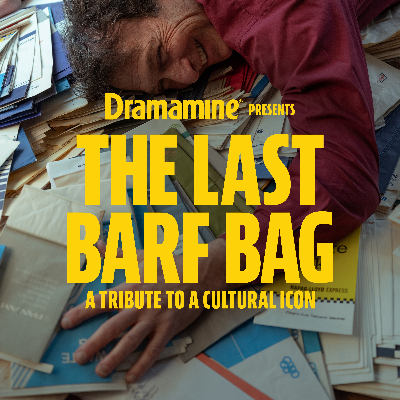
Dramamine, the #1 anti-nausea brand in the US, is so effective at preventing nausea that it ended the need for barf bags. That made us think: What if we reminded the world how effective Dramamine is by saying goodbye to the industry we are accidentally killing? So we set out to pay tribute to a fellow icon of nausea with The Last Barf Bag, an integrated campaign built around giving the barf bag a grand farewell since Dramamine has barfing covered.
We launched with a documentary that explores every corner of the barf bag universe and premiered the film at a museum exhibit in New York City, where hundreds of people interacted, admired and paid tribute to barf bags from around the world. The museum exhibit premiered the film, displayed the private collections of the four collectors featured in the documentary—with one of the star collectors from the film as a docent—and showcased a special commissioned fashion design made entirely out of barf bags. Highly targeted mobile ads drove people to the event, where everyone from niche enthusiasts, media, influencers and passersby watched the film and helped realize the potential of barf bags in a barfless world.
We also designed an e-commerce platform that imagines a better future for barf bags by selling repurposed bags for everything but barf—all to show people the impact and efficacy of Dramamine in an unexpected way.
We launched with a documentary that explores every corner of the barf bag universe and premiered the film at a museum exhibit in New York City, where hundreds of people interacted, admired and paid tribute to barf bags from around the world. The museum exhibit premiered the film, displayed the private collections of the four collectors featured in the documentary—with one of the star collectors from the film as a docent—and showcased a special commissioned fashion design made entirely out of barf bags. Highly targeted mobile ads drove people to the event, where everyone from niche enthusiasts, media, influencers and passersby watched the film and helped realize the potential of barf bags in a barfless world.
We also designed an e-commerce platform that imagines a better future for barf bags by selling repurposed bags for everything but barf—all to show people the impact and efficacy of Dramamine in an unexpected way.
Insights & Strategy
The strategy was simple: Celebrate the barf bag
Dramamine needed to reframe the conversation and elevate beyond functional efficacy alone. The strategy was built around a simple but compelling truth: Dramamine’s superior effectiveness had been so consistent over the years that it led to the gradual decline of barf bags, the iconic and once-ubiquitous method for dealing with motion sickness.
Reframing the enemy could flip the script on OTC norms
Instead of getting bogged down in comparisons with generics or newer products, Dramamine took a bold stance. It sidestepped competitors and declared ownership over the category it had created. The effort was designed to shift the conversation from competing claims of symptom relief to an audacious celebration of the brand’s effectiveness and dominance.
Dramamine needed to reframe the conversation and elevate beyond functional efficacy alone. The strategy was built around a simple but compelling truth: Dramamine’s superior effectiveness had been so consistent over the years that it led to the gradual decline of barf bags, the iconic and once-ubiquitous method for dealing with motion sickness.
Reframing the enemy could flip the script on OTC norms
Instead of getting bogged down in comparisons with generics or newer products, Dramamine took a bold stance. It sidestepped competitors and declared ownership over the category it had created. The effort was designed to shift the conversation from competing claims of symptom relief to an audacious celebration of the brand’s effectiveness and dominance.
Execution
About the humor: There is something inherently funny when a brand engages with a group of people who may not be so crazy about the brand. It’s bold, unexpected and yields a refreshing and surprising level of candor. And with barf bag collectors being such an interesting group of quirky characters, simply letting them talk about their passion was a rich source of comedy. Passionate subcultures like this one are a key part of great American mockumentaries like Best in Show and Waiting for Guffman—but in our film, the real world proved stranger than anything we could script. Similarly, the interviews in the Dramamine headquarters are reminiscent in tone of The Office and Parks and Recreation, with all their inherent corporate quirks and foibles on display. Finally, the resolution of this tension between brand and collectors is satisfying and humorous, with one man’s collection finding an unexpected new home.
About the filmmaking: Our directing team worked in two units, allowing us to canvas the country (from Alaska, to Maine, Texas, California and New York) and bring together multiple stories in real time. The film features a cast of only real people; the barf bag collectors, the Dramamine marketing team, and all of the doctors, sailors, pilots, and everyday people that we interview. This naturally creates incredible opportunities and unique challenges: finding and celebrating their commonalities to tell a cohesive story.
About the tone: Everything from the camera style to the sound score created the unique tone of this documentary. Handheld cameras helped convey our authentic story, our interview style invited viewers into the fascinating worlds and minds of our real people cast. For the sound score, we composed a body of sixteen bespoke music tracks that contribute greatly to the humor-meets-kind-heartedness that the film leaves with audiences.
About the filmmaking: Our directing team worked in two units, allowing us to canvas the country (from Alaska, to Maine, Texas, California and New York) and bring together multiple stories in real time. The film features a cast of only real people; the barf bag collectors, the Dramamine marketing team, and all of the doctors, sailors, pilots, and everyday people that we interview. This naturally creates incredible opportunities and unique challenges: finding and celebrating their commonalities to tell a cohesive story.
About the tone: Everything from the camera style to the sound score created the unique tone of this documentary. Handheld cameras helped convey our authentic story, our interview style invited viewers into the fascinating worlds and minds of our real people cast. For the sound score, we composed a body of sixteen bespoke music tracks that contribute greatly to the humor-meets-kind-heartedness that the film leaves with audiences.
Results
Outpacing Category Growth
Dramamine’s core business goal was to grow faster than the overall motion-sickness category by capturing new-to-brand consumers. The campaign led to Dramamine achieving a 7.4% sales growth, which outpaced the category by 53%. The campaign wasn’t just riding the tide of category growth but actively pulling consumers away from lower-cost generics and flashier new entrants. This growth was also reflected in Amazon sales. Post-documentary, Dramamine’s Amazon sales grew by 24%, a 20% lift compared to the same period in the previous year. This significant growth demonstrates that the documentary both generated engagement and converted viewers into buyers.
Views and Social Buzz
The documentary became a conversation starter – and garnered recognition within the film festival circuit, including the Tribeca Film Festival, Sundance’s BrandStorytelling, and the Ciclope festival. Within a month, “The Last Barf Bag” amassed over 300,000 views on YouTube, far exceeding expectations for an over-the-counter healthcare product6. On social media, organic brand mentions spiked by 53% year-over-year, with consumers sharing and discussing the quirky concept across platforms. The documentary’s viral nature extended its reach well beyond its initial launch and helped embed Dramamine in cultural discourse. Over 2 Billion impressions were made.
Organic Brand Interest and Engagement
Within three months of the documentary’s launch, Google searches for Dramamine increased by 21%3, and new-to-brand site visitors spiked by 137%4. These figures reflect the campaign’s success in reaching a new audience that was not previously engaging with the brand—demonstrating that the activation was not only entertaining but highly effective in drawing consumers’ attention to Dramamine.
The Last Barf Bag drove new-to-brand consumers, outperformed the category, and led to significant business growth in both interest and sales, ultimately re-establishing Dramamine’s dominance in the motion-sickness category.
Dramamine’s core business goal was to grow faster than the overall motion-sickness category by capturing new-to-brand consumers. The campaign led to Dramamine achieving a 7.4% sales growth, which outpaced the category by 53%. The campaign wasn’t just riding the tide of category growth but actively pulling consumers away from lower-cost generics and flashier new entrants. This growth was also reflected in Amazon sales. Post-documentary, Dramamine’s Amazon sales grew by 24%, a 20% lift compared to the same period in the previous year. This significant growth demonstrates that the documentary both generated engagement and converted viewers into buyers.
Views and Social Buzz
The documentary became a conversation starter – and garnered recognition within the film festival circuit, including the Tribeca Film Festival, Sundance’s BrandStorytelling, and the Ciclope festival. Within a month, “The Last Barf Bag” amassed over 300,000 views on YouTube, far exceeding expectations for an over-the-counter healthcare product6. On social media, organic brand mentions spiked by 53% year-over-year, with consumers sharing and discussing the quirky concept across platforms. The documentary’s viral nature extended its reach well beyond its initial launch and helped embed Dramamine in cultural discourse. Over 2 Billion impressions were made.
Organic Brand Interest and Engagement
Within three months of the documentary’s launch, Google searches for Dramamine increased by 21%3, and new-to-brand site visitors spiked by 137%4. These figures reflect the campaign’s success in reaching a new audience that was not previously engaging with the brand—demonstrating that the activation was not only entertaining but highly effective in drawing consumers’ attention to Dramamine.
The Last Barf Bag drove new-to-brand consumers, outperformed the category, and led to significant business growth in both interest and sales, ultimately re-establishing Dramamine’s dominance in the motion-sickness category.
2025 Awards
Total Points: 3

Merit

Credits
Agency
FCB / Chicago
360PR / Boston
The Shipyard / Columbus
Agency In-House Production Company
456 Studios / Chicago
Production Company
Rakish / Los Angeles
Extra Packaging
SPCFuel
Music / Sound Production Company
JSM Music / New York
Art Director
Mike Otero
Associate Creative Director
Gustavo Dallegrave
Chief Creative Officer
Andrés Ordóñez
Joel Simon
Pedro Perez
Content Creator
Chris Colvin
Copywriter
Jason Oppenheimer
Ryan Israel
Zach Frazer
Creative Director
Kristin Zuccarini
Luiz Faria
Tom Flanigan
Director
Sunny Sixteen
Executive Creative Director
Bruno Mazzotti
Desmond LaVelle
Monique Kaplan
Motion Designer
Anj Puglise
Justin Orr
Kathleen Chee
Kevin Companey
Louis Zeller
Max Dawson
Mike Czerniuk
Shivani Varandani
Sound Designer
Marco Morales
Executive Producer
Elise Garber
Jeff Fiorello
Lisa Lon
Rachel Ginnetti
Global Creative Partner
Danilo Boer
VP, Strategic Planning Director
Yisha Zhang
Account Director
Andrea Kleinman
Account Director, Experiential
Adam Russell
Account Executive
Eleanor Carignan
Analytics Supervisor
Lydia Sum
Assistant Account Executive
Hailey Rosenberg
EVP, Executive Director Agency Production
Matt Blitz
EVP, Group Strategic Planning Director
Landi Day
EVP, Head of Copy
John Fiebke
Line Producer
Mario D'Amici
President
Jennifer Neumann
Product Innovation Manager
Eniola Eboda
Production Business Manager
Cathi Fremer
Senior Project Manager
Sydney Watson
Senior Talent Manager
Gayle Heldmann
Sr. Brand Manager
Erica Nesbitt
Sr. Marketing Director
Frank Paukowits
Studio Technician
Rickey Rogers
SVP, Global Executive Creative Producer
John Bleeden
SVP, Management Director
Taylor Walker
SVP, Management Director, Experiential
Jeannine Aniol
SVP, Strategic Analytics Director
Jordan Snyder
SVP, Strategic Planning Director
Tricia Russo
Vice President of Marketing
Randi Jachino
VP, Business Affairs Director
Jeff Cowie
VP, Director of Music
Stump Mahoney
Related Awards