The One Show
The One Show is the world's most prestigious award show in advertising and design. For over 50 years, the Gold Pencil has been regarded as one of the top prizes in the creative industry. The One Show has a rich legacy of honoring some of the most groundbreaking ideas, created by some of the most remarkable minds in creativity.
Learn more about The One Show 2026
You have exceeded your allotted number of views.
For full access to our extensive awards archive
Members Login Here
For full access to our extensive awards archive
Members Login Here
Category
Craft / Casting
Annual ID
OS25_RA043M
Background
MCDONALD'S SUSTAINED BY GEN-Zs.
3,000 shops nationwide. 100 million visitors every month. Behind this mega-business was Gen Z, which accounted for about 60% of the total workforce. However, with Japan's birthrate declining, the number of crew members is decreasing year by year and the company suffered from a chronic shortage of staff.
THE BIG HANDICAP OF THE 'ZERO YEN SMILE'
McDonald's 'zero yen smile', which it had upheld since its inception, was a symbol of hospitality for customers, but it was a becoming a barrier for those considering part-time work. It went against the values of Gen Z, who wanted to live life on their own terms.
ALSO A SOURCE OF CURIORSITY ON SNS
Prank videos were being uploaded on Youtube and Tiktok ordering smiles and forcing people to smile, reducing the appeal of working at McDonald's.
CULTURAL BACKGROUND: Japan, the land of hospitality, was also the land of forced smiles.
Visitors to the country encounter many smiling faces. This is because the Japanese are hospitality-minded with a culture of respect for others. However, the excessive customer-first mentality can mean hardship for workers. There was pressure to smile at all times.
3,000 shops nationwide. 100 million visitors every month. Behind this mega-business was Gen Z, which accounted for about 60% of the total workforce. However, with Japan's birthrate declining, the number of crew members is decreasing year by year and the company suffered from a chronic shortage of staff.
THE BIG HANDICAP OF THE 'ZERO YEN SMILE'
McDonald's 'zero yen smile', which it had upheld since its inception, was a symbol of hospitality for customers, but it was a becoming a barrier for those considering part-time work. It went against the values of Gen Z, who wanted to live life on their own terms.
ALSO A SOURCE OF CURIORSITY ON SNS
Prank videos were being uploaded on Youtube and Tiktok ordering smiles and forcing people to smile, reducing the appeal of working at McDonald's.
CULTURAL BACKGROUND: Japan, the land of hospitality, was also the land of forced smiles.
Visitors to the country encounter many smiling faces. This is because the Japanese are hospitality-minded with a culture of respect for others. However, the excessive customer-first mentality can mean hardship for workers. There was pressure to smile at all times.
Creative Idea
No Smiles - Genuine smiles filled the company, when you actually didn’t have to smile -
McDonald's, which always placed great emphasis on 'smiles', delivered a message to through music: it's okay not to force a smile and to work authentically. The music resonated with many users and spread rapidly.
CHANGE IN HIRING POLICY: "Work with your smile" → "Work with your style"
Before creating the song, McDonald's, known as a smile-laden brand, thoroughly reviewed all its hiring criteria and manuals to create a more -friendly work environment.
COLLABORATION: When a Non-Smiling Idol Met McDonald's.
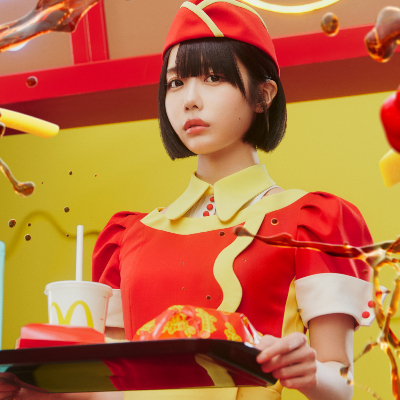
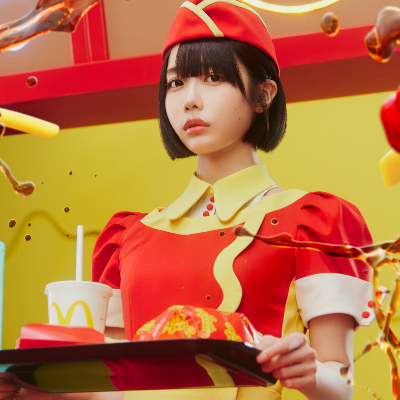
Ano, an artist immensely popular among Gen-Zs, was cast for the collaboration. She is known for her authentic no-nonsense personality and as a "non-smiling idol." She also had a true story of being fired from a part-time job for not being 'smiley' enough.
McDonald's, which always placed great emphasis on 'smiles', delivered a message to through music: it's okay not to force a smile and to work authentically. The music resonated with many users and spread rapidly.
CHANGE IN HIRING POLICY: "Work with your smile" → "Work with your style"
Before creating the song, McDonald's, known as a smile-laden brand, thoroughly reviewed all its hiring criteria and manuals to create a more -friendly work environment.
COLLABORATION: When a Non-Smiling Idol Met McDonald's.
Ano, an artist immensely popular among Gen-Zs, was cast for the collaboration. She is known for her authentic no-nonsense personality and as a "non-smiling idol." She also had a true story of being fired from a part-time job for not being 'smiley' enough.
Insights & Strategy
INSIGHT: Gen-Zs suffer from pressure to smile
The pressure to 'smile all the time' was prevalent in the daily lives of Gen-Zs, negatively affecting their mental health. Japan has one of the highest rates of depression and suicide in the world; only in Japan was there a significant increase in the rate of suicides among Gen-Zs.
BRAND STANDPOINT: McDonald's was complicit in this.
McDonald's Japan, which has upheld the smile since its establishment in Japan, was one of the brands involved in creating this stifling 'smile culture'.
TURNING THE "0 YEN SMILE" CHALLENGE INTO OPPORTUNITY
While the "0 yen smile" was a cherished brand asset for many years, it was also seen by Gen-Zs as 'forced'. We realised that disrupting this cherished asset would give us the biggest impact.
TRANSFORMING THE SMILE FROM A SYMBOL OF HOSPITALITY TO ONE OF THE DIVERSITY.
The smile, a symbol of a customer-first brand, was transformed into a symbol of respect for the diverse dispositions of the workers. A disruption to match the new values of a new era.
COMMUNICATION WITHOUT ADVERTISING'S FACADE.
In order to approach Gen-Zs, who do not watch TV and are generally skeptical of mass media, influencers with large followings were used as spokespersons. Starting with the music scene and the artists themselves, we penetrated the scene as a pop culture phenomenon rather than commerce.
The pressure to 'smile all the time' was prevalent in the daily lives of Gen-Zs, negatively affecting their mental health. Japan has one of the highest rates of depression and suicide in the world; only in Japan was there a significant increase in the rate of suicides among Gen-Zs.
BRAND STANDPOINT: McDonald's was complicit in this.
McDonald's Japan, which has upheld the smile since its establishment in Japan, was one of the brands involved in creating this stifling 'smile culture'.
TURNING THE "0 YEN SMILE" CHALLENGE INTO OPPORTUNITY
While the "0 yen smile" was a cherished brand asset for many years, it was also seen by Gen-Zs as 'forced'. We realised that disrupting this cherished asset would give us the biggest impact.
TRANSFORMING THE SMILE FROM A SYMBOL OF HOSPITALITY TO ONE OF THE DIVERSITY.
The smile, a symbol of a customer-first brand, was transformed into a symbol of respect for the diverse dispositions of the workers. A disruption to match the new values of a new era.
COMMUNICATION WITHOUT ADVERTISING'S FACADE.
In order to approach Gen-Zs, who do not watch TV and are generally skeptical of mass media, influencers with large followings were used as spokespersons. Starting with the music scene and the artists themselves, we penetrated the scene as a pop culture phenomenon rather than commerce.
Execution
HOW TO GET GEN-Z GO VIRAL: MUSIC.
Audio-centric viral media such as YouTube, TikTok and Instagram stories were strategically exploited. The music was also spread through the artist's own radio show while she also performed on TV shows and tours.
MCDONALD'S BECAME LIVE VENUES.
Broadcast daily as in-store background music at approximately 3,000 McDonald's across Japan. An AR live event was also conducted, only accessible at McDonald's. Many youngsters visiting were switched on to the culture of McDonald's, becoming potential future crew.
TRUE LIFE STORY LYRICS.
The artist herself had a past where she was fired from her part-time job because she wasn't 'smiley' enough, and the lyrics are based on this experience.
A HIGHLY ADDICTIVE SOUND.
The music was created with catchy rhythms and sounds. Commissioning music maker Kenmochi Hidefumi, who makes some of the most viral songs on Tiktok. The track has a sharp message, but with a poppy, casual tone characteristic of McDonald's.
Audio-centric viral media such as YouTube, TikTok and Instagram stories were strategically exploited. The music was also spread through the artist's own radio show while she also performed on TV shows and tours.
MCDONALD'S BECAME LIVE VENUES.
Broadcast daily as in-store background music at approximately 3,000 McDonald's across Japan. An AR live event was also conducted, only accessible at McDonald's. Many youngsters visiting were switched on to the culture of McDonald's, becoming potential future crew.
TRUE LIFE STORY LYRICS.
The artist herself had a past where she was fired from her part-time job because she wasn't 'smiley' enough, and the lyrics are based on this experience.
A HIGHLY ADDICTIVE SOUND.
The music was created with catchy rhythms and sounds. Commissioning music maker Kenmochi Hidefumi, who makes some of the most viral songs on Tiktok. The track has a sharp message, but with a poppy, casual tone characteristic of McDonald's.
Results
- MV VIEWS: OVER 10M.
- OVER 36M including user contributions and views on other social networking sites (as of April 2024). This equates to all of Gen Z in Japan having seen the video more than twice.
- Number of recruits, the biggest goal of McDonald's Japan: OVER 100,000. The largest number ever in the company's 5 decades of operation in Japan. A recruitment impact that far exceeded the target.
- Brand Score "The Good Employer" among Gen-Zs increased by 130%.
- The word 'smile'in the manual, which had been untouched for 50 years, has also changed. Changes to the rules have also been made in line with the the values of.
- This movement spread to other companies across Japan and the song became a hallmark of the 'Be yourself' working style.
- OVER 36M including user contributions and views on other social networking sites (as of April 2024). This equates to all of Gen Z in Japan having seen the video more than twice.
- Number of recruits, the biggest goal of McDonald's Japan: OVER 100,000. The largest number ever in the company's 5 decades of operation in Japan. A recruitment impact that far exceeded the target.
- Brand Score "The Good Employer" among Gen-Zs increased by 130%.
- The word 'smile'in the manual, which had been untouched for 50 years, has also changed. Changes to the rules have also been made in line with the the values of.
- This movement spread to other companies across Japan and the song became a hallmark of the 'Be yourself' working style.
2025 Awards
Total Points: 3

Merit

Credits
Agency
TBWA\HAKUHODO Inc. / TOKYO
Production Company
Robot Communications Inc. / Tokyo
Art Director
Aya Naito
Chief Creative Officer
Takahiro Hosoda
Composer
Hidefumi Kenmochi
Copywriter
Yutaro Nagata
Creative Director
Ryota Haraguchi
Director
Nao Watanabe
Editor
Ko Yamamoto
Nobuo Mita
Artist
ano -
Chief Creative Officer, Asia & Singapore
Peter Khoury
Senior Art Director
Yosuke Sugioka
Senior Copywriter
Shohei Oishi
Account Executive
Chisato Mise
Account Supervisor
Yu Hashimoto
Chief Operating Officer
Chris Iki
Head of International Account
Sayaka Ono
Music Producer
Kazuna Hirose
Production Manager
Akari Okada
Senior Account Director
Takahiro Takeoka
Sound engineer
Hideyuki Matsuhashi
Masayuki Yoshii
Related Awards