The One Show
The One Show is the world's most prestigious award show in advertising and design. For over 50 years, the Gold Pencil has been regarded as one of the top prizes in the creative industry. The One Show has a rich legacy of honoring some of the most groundbreaking ideas, created by some of the most remarkable minds in creativity.
Category
Technology for Good
Annual ID
OS26_CT009B
Background
To understand Caption with Intention, one must first understand the state of closed captions before its creation. While filmmaking technology has evolved dramatically over the past five decades, captions have remained virtually unchanged since 1971. Outdated, imprecise, and emotionally flat, they were merely functional, and little else. Which meant they were failing the very people who needed them most; failing to convey all of us enjoy so much about film—the emotion and nuance. Fixing this required more than a tweak—it demanded a reinvention.
Globally, nearly 1.5 billion people live with some degree of hearing loss. For them, captions are not just an option; they are essential to experiencing film. This huge community was being underserved by a system that was failing them. We knew we had not just the ability, but also the responsibility to change that.
Caption with Intention partnered with The Academy of Motion Picture Arts and Sciences, Rakish Entertainment, and The Chicago Hearing Society to see this through. The Academy exists to uphold excellence in film, inspire imagination, and connect the world through motion pictures. But to truly fulfill that mission, they know they must ensure the film experience is equitable—for everyone.
As a production company, Rakish understands the motivation that drives filmmakers, and how every audience deserves to have the most impactful experience possible. And the Chicago Hearing Society provided validation, guidance, and input for our ideas and efforts along the way.
Globally, nearly 1.5 billion people live with some degree of hearing loss. For them, captions are not just an option; they are essential to experiencing film. This huge community was being underserved by a system that was failing them. We knew we had not just the ability, but also the responsibility to change that.
Caption with Intention partnered with The Academy of Motion Picture Arts and Sciences, Rakish Entertainment, and The Chicago Hearing Society to see this through. The Academy exists to uphold excellence in film, inspire imagination, and connect the world through motion pictures. But to truly fulfill that mission, they know they must ensure the film experience is equitable—for everyone.
As a production company, Rakish understands the motivation that drives filmmakers, and how every audience deserves to have the most impactful experience possible. And the Chicago Hearing Society provided validation, guidance, and input for our ideas and efforts along the way.
Creative Idea
Filmmaking has evolved in countless ways, but film captions haven’t kept up.
Deaf and hard-of-hearing audiences relied on outdated captions that lagged dialogue, missed emotional nuance, and failed to identify who’s speaking. There was a glaring need for change.
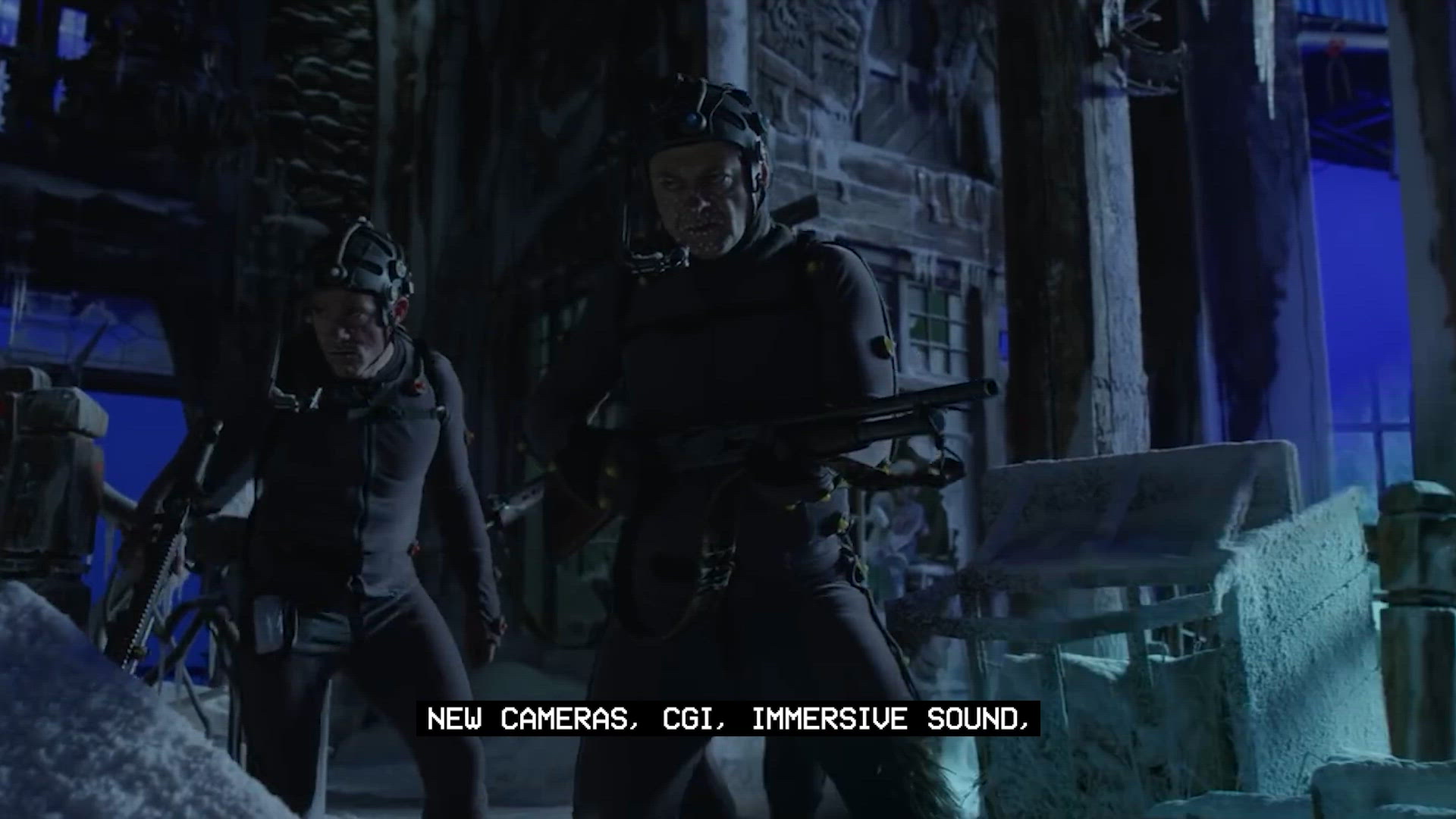
Which is why we created Caption with Intention. It’s a dynamic captioning system that syncs with speech, uses expressive typography to show tone, and color-codes characters for instant recognition.
We worked closely with the Deaf community over 10 months, testing the idea and making sure we could validate our solutions. More than a tool, Caption with Intention is an invitation to make cinema more inclusive for the 1.5 billion Deaf and hard-of-hearing people who deserve to experience it fully.
So far, Caption with Intention has been recognized in the Oscars 2026 Submission Rule Book and honored with an Academy Award for technical achievement. It’s becoming a new industry standard.
Deaf and hard-of-hearing audiences relied on outdated captions that lagged dialogue, missed emotional nuance, and failed to identify who’s speaking. There was a glaring need for change.
Which is why we created Caption with Intention. It’s a dynamic captioning system that syncs with speech, uses expressive typography to show tone, and color-codes characters for instant recognition.
We worked closely with the Deaf community over 10 months, testing the idea and making sure we could validate our solutions. More than a tool, Caption with Intention is an invitation to make cinema more inclusive for the 1.5 billion Deaf and hard-of-hearing people who deserve to experience it fully.
So far, Caption with Intention has been recognized in the Oscars 2026 Submission Rule Book and honored with an Academy Award for technical achievement. It’s becoming a new industry standard.
Insights & Strategy
Early research with Deaf participants revealed a critical insight: captions weren’t just failing functionally; they were failing emotionally. Millions were being excluded from the nuance and clarity that define the cinematic experience. That reframed our challenge. It wasn’t enough to make captions accessible; they had to be felt.
Our strategy became: don’t just make captions functional, make them cinematic.
This wouldn’t just be an upgrade. It required a complete redesign. We built a new captioning system inspired by the language of film—performance, pacing, and emotion. We then tested it over 10 months with a panel of 125 Deaf participants, refining every element from timing to typeface. Their feedback shaped a system that didn’t just convey what was said, but how, when, and by whom. What began as an insight evolved into a strategy that only worked because the community it aimed to serve helped shape it.
Our strategy became: don’t just make captions functional, make them cinematic.
This wouldn’t just be an upgrade. It required a complete redesign. We built a new captioning system inspired by the language of film—performance, pacing, and emotion. We then tested it over 10 months with a panel of 125 Deaf participants, refining every element from timing to typeface. Their feedback shaped a system that didn’t just convey what was said, but how, when, and by whom. What began as an insight evolved into a strategy that only worked because the community it aimed to serve helped shape it.
Execution
Caption with Intention was brought to life through a rigorous, 10-month iterative process. We developed prototypes for the system based on classic movie scenes, where we tested captioning solutions with a panel of 125 members from the Deaf and hard-of-hearing communities. We refined the system multiple times based on their feedback.
Implementation spanned in-person panels, online stimulus testing, collaboration with the Chicago Hearing Society, and feedback from Deaf professionals and CODA participants within our organization.
Rakish Entertainment worked with the Academy of Motion Picture Arts and Sciences—Hollywood’s most trusted voice—to engage studios, filmmakers, and distributors. Together, we ensured every captioning rule was created with future automation in mind, further simplifying adoption at scale across the entertainment industry.
Launching Caption with Intention through the Academy gave us unrivaled access to industry leaders, making it possible to embed the system into the medium itself, and setting the stage for long-term systemic change.
Implementation spanned in-person panels, online stimulus testing, collaboration with the Chicago Hearing Society, and feedback from Deaf professionals and CODA participants within our organization.
Rakish Entertainment worked with the Academy of Motion Picture Arts and Sciences—Hollywood’s most trusted voice—to engage studios, filmmakers, and distributors. Together, we ensured every captioning rule was created with future automation in mind, further simplifying adoption at scale across the entertainment industry.
Launching Caption with Intention through the Academy gave us unrivaled access to industry leaders, making it possible to embed the system into the medium itself, and setting the stage for long-term systemic change.
Results
Caption with Intention sparked immediate and lasting impact. Within 60 days of launch, it generated over 20 million impressions and 5.6 million engagements—driven entirely by earned media and industry buzz. It was awarded an Academy Award for Technical Achievement and formally included in the Oscar 2026 Submission Rulebook, cementing its status as a new industry standard. Now supported in 196 languages, the system is rapidly scaling, with major streaming platforms and global distributors expressing strong adoption interest.
Critically, it was embraced by the Deaf community: 87% of participants said they were more likely to watch films using the new system, and 78% reported greater comprehension and enjoyment compared to traditional captions.
Leading accessibility organizations have called it a model for inclusive design, pushing the broader entertainment industry to follow suit. This wasn’t just a creative breakthrough—it was a cultural and commercial one.
Performance Metrics
• Over 20M impressions and 5.6M engagements across social platforms within the first 20 days of announcement—driven by earned media and industry buzz.
• Recognized with an Academy Award for Technical Achievement, fueling a measurable lift in brand prestige for Rakish Entertainment and participating studios.
• Included in the official Oscar 2026 Submission Rulebook, establishing a new industry standard.
• System now supported in 196 languages, accelerating global scalability and long-term adoption potential.
• Increased inbound interest from streaming platforms and international distributors, suggesting strong medium-term ROI and licensing revenue potential.
• Advocated for by leading Deaf rights organizations as a model for inclusive design in the media—pushing streaming platforms and studios to adopt
• 87% of Deaf participants in testing reported increased likelihood to watch new films using Caption with Intention.
• 78% of Deaf users surveyed reported greater enjoyment and comprehension with the new caption system (vs. traditional).
Critically, it was embraced by the Deaf community: 87% of participants said they were more likely to watch films using the new system, and 78% reported greater comprehension and enjoyment compared to traditional captions.
Leading accessibility organizations have called it a model for inclusive design, pushing the broader entertainment industry to follow suit. This wasn’t just a creative breakthrough—it was a cultural and commercial one.
Performance Metrics
• Over 20M impressions and 5.6M engagements across social platforms within the first 20 days of announcement—driven by earned media and industry buzz.
• Recognized with an Academy Award for Technical Achievement, fueling a measurable lift in brand prestige for Rakish Entertainment and participating studios.
• Included in the official Oscar 2026 Submission Rulebook, establishing a new industry standard.
• System now supported in 196 languages, accelerating global scalability and long-term adoption potential.
• Increased inbound interest from streaming platforms and international distributors, suggesting strong medium-term ROI and licensing revenue potential.
• Advocated for by leading Deaf rights organizations as a model for inclusive design in the media—pushing streaming platforms and studios to adopt
• 87% of Deaf participants in testing reported increased likelihood to watch new films using Caption with Intention.
• 78% of Deaf users surveyed reported greater enjoyment and comprehension with the new caption system (vs. traditional).
2026 Awards
Total Points: 9

Bronze Pencil
Credits
Agency
Omnicom / Chicago
Agency In-House Production Company
Omnicom Production / Chicago
Production Company
Pes Motion Studio / Chicago
Post Production Company
BELIEVE TV / Santiago
Art Director
Vitor Favero
Associate Creative Director
Gustavo Dallegrave
Zach Frazer
Frederik Clarysse
Nihal Atawane
Silas Nogueira
Chief Creative Officer
Pedro Perez
Chief Marketing Officer
Kaya Much
Chief Strategy Officer
Mollie Partesotti
Content Creator
Chris Colvin
Mike Smith
Group Creative Director
So A Ryu
Editor
Dave Cullen
Gus Spelman
Quinn Lueder
Zac Schmidt
Ariel Diosdado
Brandon Bunner
Eema Siddiqui
Jackie Moorman
Natalia Trejo
Seamus Hehir
Executive Creative Director
Bruno Mazzotti
Global Chief Creative Officer
Andrés Ordóñez
Executive Producer
Lisa Long
Global Creative Partner
Danilo Boer
Analytics Director
Olivia Parker
Animation Direction
Caja Guedes
Audio Engineer
Marco Morales
Zach Scheitlin
Colorist
Caleb Hill
Coordinator, Training & Education
Karla Giese
Creative & Motion Direction
Pedro Estanga
Director, Global Communications & Content
Emilie Sharp
EVP, Global Project Lead
Alison Lutsky
EVP, Head of Copy
John Fiebke
EVP, Managing Director, Data Intelligence
Eric Chun
Executive Director
Karen Aguilar
GFX Artist
Anthony Malagutti
Louis Zeller
Max Dawson
Michelle Timpone
Shivani Varandani
Global CMO & International Lead
Brandon Cooke
Global Creative Services & Awards Associate
Alisa Zervas
Management Director
Lauren Scholten
Motion Graphics Development
Lucas Negrão
Post Production Coordination
Jess Marques
President
Jennifer Neumann
Prompt Engineer
Guilherme Guinness
Senior Analyst
Devin Montgomery
SVP, Global Executive Creative Producer
John Bleeden
SVP, Group Management Director
Zachary Kieltyka
SVP, Strategic Analytics Director
Jennifer Asai
VP, Strategic Services & Awards
Kristin Oberg
Related Awards