The One Show
The One Show is the world's most prestigious award show in advertising and design. For over 50 years, the Gold Pencil has been regarded as one of the top prizes in the creative industry. The One Show has a rich legacy of honoring some of the most groundbreaking ideas, created by some of the most remarkable minds in creativity.
Category
Community-Driven Campaigns
Annual ID
OS26_HW021B
Background
Nana, known globally as Bodyform or Libresse, has a long-standing role in challenging period stigma worldwide.
While global conversations around menstruation have progressed toward openness and education, the Middle East
remains culturally cautious. Periods are still widely considered private, difficult to discuss, and often excluded from
structured education.
For autistic girls, whose sensory sensitivities and communication differences demand more tailored support, the
silence is even louder.
The UAE is ranked second highest in autism prevelence rates globally, yet resources tailored to autistic girls remain
limited. Research shows that autistic girls often enter puberty earlier than neurotypical peers, meaning their first
period arrives before families, schools, or systems are prepared to support them. Period education in the region is
largely verbal, abstract, or avoided altogether, relying on metaphors and social cues that autistic girls struggle to
process.In 2024, Nana launched its global platform “Never Just a Period,” a commitment to representing the real, often
overlooked experiences women face. For the brand, this moment demanded more than awareness. It required
leadership in spaces where culture and systems had failed to create solutions.
Ruby Blooms was created at the intersection of these realities: a culturally sensitive region, a vulnerable audience,
and a life stage marked by fear rather than understanding.It was designed to offer a personal, trusted way for
families and institutions to address a topic culture had long left unspoken.
While global conversations around menstruation have progressed toward openness and education, the Middle East
remains culturally cautious. Periods are still widely considered private, difficult to discuss, and often excluded from
structured education.
For autistic girls, whose sensory sensitivities and communication differences demand more tailored support, the
silence is even louder.
The UAE is ranked second highest in autism prevelence rates globally, yet resources tailored to autistic girls remain
limited. Research shows that autistic girls often enter puberty earlier than neurotypical peers, meaning their first
period arrives before families, schools, or systems are prepared to support them. Period education in the region is
largely verbal, abstract, or avoided altogether, relying on metaphors and social cues that autistic girls struggle to
process.In 2024, Nana launched its global platform “Never Just a Period,” a commitment to representing the real, often
overlooked experiences women face. For the brand, this moment demanded more than awareness. It required
leadership in spaces where culture and systems had failed to create solutions.
Ruby Blooms was created at the intersection of these realities: a culturally sensitive region, a vulnerable audience,
and a life stage marked by fear rather than understanding.It was designed to offer a personal, trusted way for
families and institutions to address a topic culture had long left unspoken.
Creative Idea
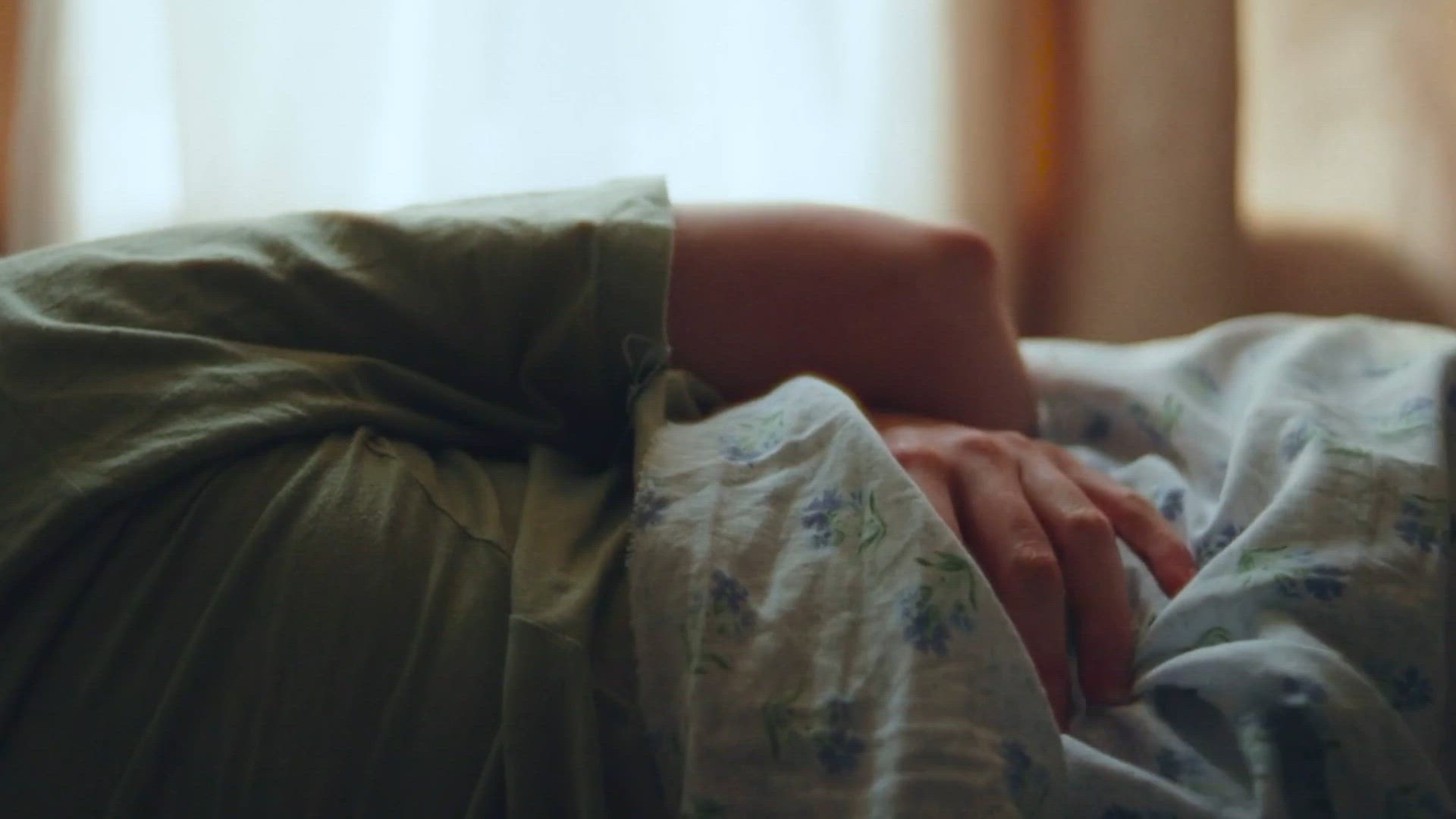
Ruby Blooms was created to replace explanation with experience. Rather than telling autistic girls what a period is,
the work allowed them to safely explore what it feels like before it happens.
Ruby Blooms became the world’s first sensory period guidebook for autistic girls, mirroring the menstrual cycle
across 28 pages and integrating texture, scent, sound, and calming visuals. This transformed a moment typically
associated with fear into one grounded in familiarity and control.
The idea crossed traditional category boundaries, sitting between healthcare, education, and design. It did not seek
attention or shock, but redefined how brands can participate in cultural change by designing tools instead of
messages. By turning an overwhelming biological moment into a guided sensory experience, Ruby Blooms
transcended awareness and delivered a tangible solution where none existed.
the work allowed them to safely explore what it feels like before it happens.
Ruby Blooms became the world’s first sensory period guidebook for autistic girls, mirroring the menstrual cycle
across 28 pages and integrating texture, scent, sound, and calming visuals. This transformed a moment typically
associated with fear into one grounded in familiarity and control.
The idea crossed traditional category boundaries, sitting between healthcare, education, and design. It did not seek
attention or shock, but redefined how brands can participate in cultural change by designing tools instead of
messages. By turning an overwhelming biological moment into a guided sensory experience, Ruby Blooms
transcended awareness and delivered a tangible solution where none existed.
Insights & Strategy
Research and expert consultation revealed that autistic girls struggle most with traditional period education, which
relies on verbal explanation, abstract language, and social cues. Cultural taboos around menstruation in the region
further limit open discussion, intensifying fear and confusion at a critical life stage.
Rather than confronting culture or amplifying awareness, Nana chose to work within existing boundaries. The
strategic shift moved from explaining periods to helping girls feel prepared. This required reversing the norm: instead
of asking autistic girls to adapt to existing systems, the system had to adapt to them.
Ruby Blooms was designed around how autistic girls naturally receive information, through sensory familiarity,
emotional safety, and gradual exposure. The call-to-action was private engagement, inviting parents, educators, and
therapists to use the guide directly with girls, turning education into a shared, supported experience that replaced
fear with readiness.
relies on verbal explanation, abstract language, and social cues. Cultural taboos around menstruation in the region
further limit open discussion, intensifying fear and confusion at a critical life stage.
Rather than confronting culture or amplifying awareness, Nana chose to work within existing boundaries. The
strategic shift moved from explaining periods to helping girls feel prepared. This required reversing the norm: instead
of asking autistic girls to adapt to existing systems, the system had to adapt to them.
Ruby Blooms was designed around how autistic girls naturally receive information, through sensory familiarity,
emotional safety, and gradual exposure. The call-to-action was private engagement, inviting parents, educators, and
therapists to use the guide directly with girls, turning education into a shared, supported experience that replaced
fear with readiness.
Execution
Ruby Blooms demanded more than storytelling; it required sensory precision to support health education for autistic
girls often excluded from traditional learning.
Housed in a 30 x 30 cm format sized for young hands, the guide featured durable, plastic-based pages built to
withstand repeated tactile exploration. Literal illustrations, calm visual pacing, and structured progression worked
together to create predictability, reducing sensory overwhelm while supporting comprehension.
Development began with medical experts shaping the educational flow, before illustrators and book producers
translated it into an intuitive physical experience.
The craft lay in intentional restraint: knowing what to include, soften, or remove.
It wasn’t enough to create a book that looked considered; it had to function as an accessible learning tool for those
who experience the world differently.
OPEN THE CONVERSATION WITH REAL STORIES.
The rollout began with sharing real stories from parents of autistic girls to surface the emotional reality of periods
without sensationalism. This was grounded by the voice of autism specialists involved in the project, reinforcing the
need for tools built in a language autistic girls can truly understand.
INTRODUCE THE EXPERIENCE IN TRUSTED SPACES
Ruby Blooms launched through live readings within clinics, therapy rooms, and schools, allowing girls and caregivers
to experience the guide firsthand in environments defined by care and credibility. Instead of pursuing mass exposure,
the work moved through familiar community networks and healthcare voices.
AMPLIFY THROUGH AUTHENTIC ADVOCACY
Authentic reactions, specialist validation, real usage, and caregiver reactions replaced promotional messaging.
Social platforms later amplified these experiences without altering tone. By leading with empathy and scaling through
community trust, execution stayed aligned with its purpose: meeting families where they already felt safe.
girls often excluded from traditional learning.
Housed in a 30 x 30 cm format sized for young hands, the guide featured durable, plastic-based pages built to
withstand repeated tactile exploration. Literal illustrations, calm visual pacing, and structured progression worked
together to create predictability, reducing sensory overwhelm while supporting comprehension.
Development began with medical experts shaping the educational flow, before illustrators and book producers
translated it into an intuitive physical experience.
The craft lay in intentional restraint: knowing what to include, soften, or remove.
It wasn’t enough to create a book that looked considered; it had to function as an accessible learning tool for those
who experience the world differently.
OPEN THE CONVERSATION WITH REAL STORIES.
The rollout began with sharing real stories from parents of autistic girls to surface the emotional reality of periods
without sensationalism. This was grounded by the voice of autism specialists involved in the project, reinforcing the
need for tools built in a language autistic girls can truly understand.
INTRODUCE THE EXPERIENCE IN TRUSTED SPACES
Ruby Blooms launched through live readings within clinics, therapy rooms, and schools, allowing girls and caregivers
to experience the guide firsthand in environments defined by care and credibility. Instead of pursuing mass exposure,
the work moved through familiar community networks and healthcare voices.
AMPLIFY THROUGH AUTHENTIC ADVOCACY
Authentic reactions, specialist validation, real usage, and caregiver reactions replaced promotional messaging.
Social platforms later amplified these experiences without altering tone. By leading with empathy and scaling through
community trust, execution stayed aligned with its purpose: meeting families where they already felt safe.
Results
What began as a purpose-driven idea turned into a community-led movement that changed how autistic girls and
their families experience periods. The impact spanned awareness, behaviour, and trust:
•43% of autistic girls in the UAE reached.
•Books were read by 2000+ girls.
•94% of parents observed reduced sensory distress
•91% of autistic girls FELT MORE AT EASE WITH pads
•Special needs schools integrated it
•Ruby Blooms contributed to advancing sensory-first education, resulting in a published scientific research paper
(featured in regional and global publications)
More than reach, the results proved that when a brand leads with empathy, it can reshape how autistic girls face
something as complex and emotional as their first period.
their families experience periods. The impact spanned awareness, behaviour, and trust:
•43% of autistic girls in the UAE reached.
•Books were read by 2000+ girls.
•94% of parents observed reduced sensory distress
•91% of autistic girls FELT MORE AT EASE WITH pads
•Special needs schools integrated it
•Ruby Blooms contributed to advancing sensory-first education, resulting in a published scientific research paper
(featured in regional and global publications)
More than reach, the results proved that when a brand leads with empathy, it can reshape how autistic girls face
something as complex and emotional as their first period.
2026 Awards
Total Points: 9

Bronze Pencil
Credits
Agency
Saatchi & Saatchi UAE / Dubai
Media Agency
Zenith Middle East / Dubai
Agency In-House Production Company
Prodigious Middle East / Dubai
Production Company
Studio Pond
Enso Studios / Dubai
Indi Studios / Dubai
Animator
Daniel Masilang
Associate Creative Director
Vinicius Claudino
Siddarth Joglekar
Maya El Kai
Chief Creative Officer
Sebastien Boutebel
Chief Strategy Officer
Tahaab Rais
Group Creative Director
Bruno Barbosa
Anika Marya
Rita Harbie
Illustrator
Mario Niveo
Motion Designer
Michael Marmito
Product Designer
Hugo Miguel
Strategist
Fatima Talaat
Head of Strategy
Adrian Mutescu
Senior Art Director
Ludmila Abramov
Bruno Cavalcante
Paula Zambrano
Senior Producer
Upasana Kumar
Associate Business Director
Line Mansour
Associate Design Director
Joao Xavier
Brand Manager
Romy Abou Tayeh
Business Director
Shauna Byrne
Chief Executive Officer
Bassel Kakish
Nathalie Gevresse
Ramzi Sleiman
Sami Saleh
Communications manager
Aya Abi Saleh
Director, Corporate Communications
Angela Bak
Educational Psychologist
Rama Kanj
Head of Content
Vikrant Shetty
Head of Production
Shereen Mostafa
Manager, Corporate Communications
Chhaon Bahl
Marketing Manager MEA
Michele Karaa
Occupational Therapist
Fabiana Rotondo
Retoucher
Jesudass Manirajan
Related Awards