The One Show
The One Show is the world's most prestigious award show in advertising and design. For over 50 years, the Gold Pencil has been regarded as one of the top prizes in the creative industry. The One Show has a rich legacy of honoring some of the most groundbreaking ideas, created by some of the most remarkable minds in creativity.
Category
Public Relations
Annual ID
OS26_HW039M
Background
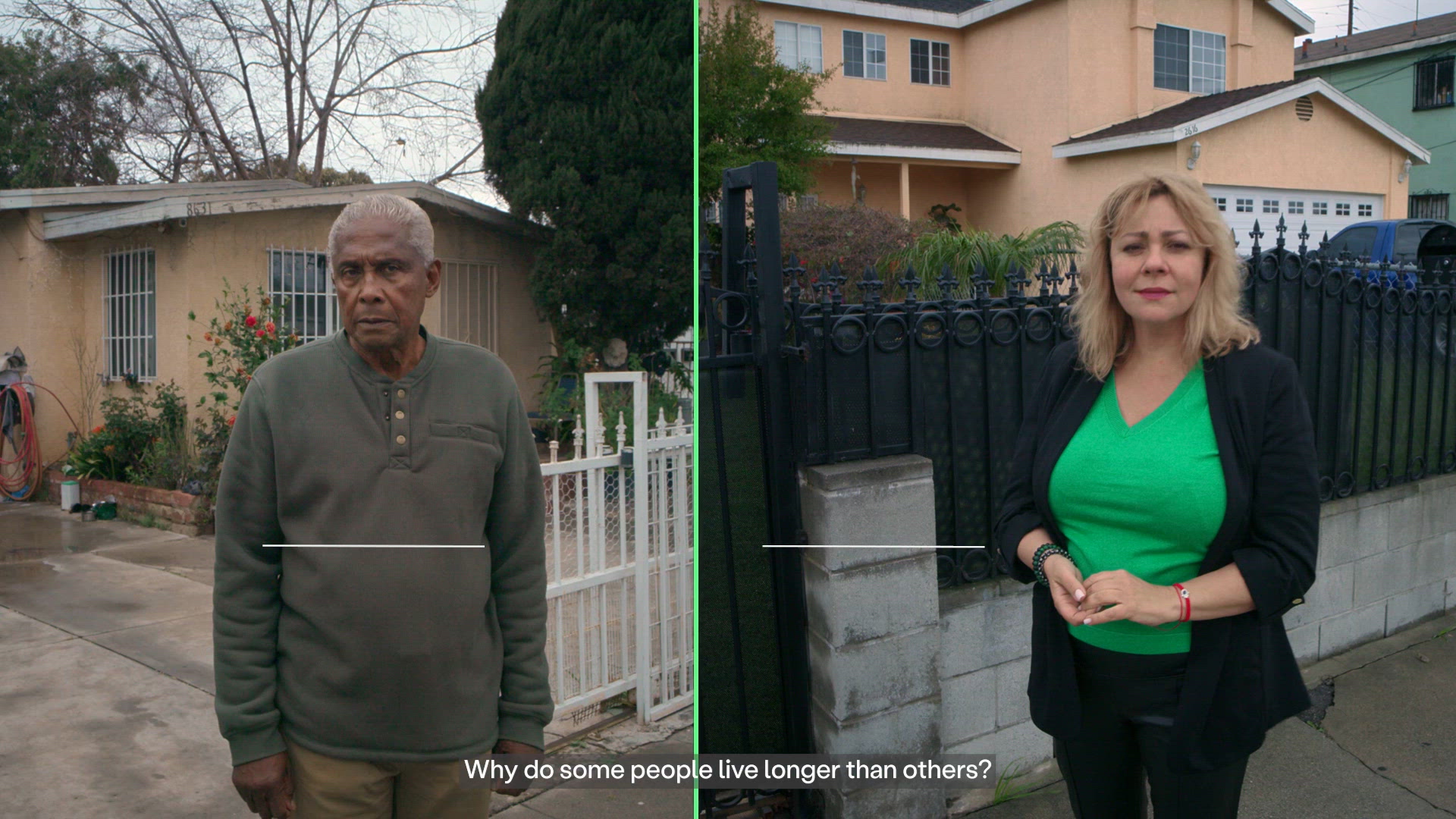
In America, the most critical health indicator might be your home address. In cities across the country, it’s common to find neighboring ZIP codes — separated by a single street or rail line — with life expectancy gaps of up to 14 years. These disparities aren’t the result of genetics or lifestyle choices, but of systemic inequality: food deserts, housing burden, transit gaps, limited education and job access, and inadequate healthcare.
Equality Health Foundation has spent years working within underserved communities across America, like South Phoenix, to close these gaps — not with prescriptions, but with partnerships. With the safety nets unraveling and public trust eroding, there was an urgent need to reignite awareness and accountability around health inequity.
Enter The Zip Code Exam — a provocative new health assessment that doesn’t start with a stethoscope but with your address. By spotlighting the geography of health, the campaign helped individuals and institutions understand the invisible forces shaping community wellness.
It wasn’t just about showing the data — it was about making people feel it. Whether passing a billboard that says, “Go left and live to 69. Go right and live to 82,” or comparing your ZIP Code to the one across the tracks, the message was always visceral: the system is broken. But change begins when we see things clearly.
Equality Health Foundation has spent years working within underserved communities across America, like South Phoenix, to close these gaps — not with prescriptions, but with partnerships. With the safety nets unraveling and public trust eroding, there was an urgent need to reignite awareness and accountability around health inequity.
Enter The Zip Code Exam — a provocative new health assessment that doesn’t start with a stethoscope but with your address. By spotlighting the geography of health, the campaign helped individuals and institutions understand the invisible forces shaping community wellness.
It wasn’t just about showing the data — it was about making people feel it. Whether passing a billboard that says, “Go left and live to 69. Go right and live to 82,” or comparing your ZIP Code to the one across the tracks, the message was always visceral: the system is broken. But change begins when we see things clearly.
Creative Idea
The Zip Code Exam reimagines what a health exam can be — using public data instead of a stethoscope. It transforms a confronting truth — that your address can predict your lifespan — into a powerful, personalized experience.
Rather than relying on traditional media or clinical tools, the campaign broke category boundaries by turning billboards into diagnostic prompts and ZIP Codes into calls for action. Hyperlocal out-of-home (OOH) placements used real-life expectancy data to provoke emotion and reflection at the neighborhood level.
This wasn’t just surprising — it was unforgettable. Headlines like “Cross this street, lose 10 years” made invisible inequalities visible, sparking conversation online and offline.
By connecting data, storytelling, geography, and digital tools, the campaign transcended its original challenge — not just raising awareness of health disparities, but empowering users to explore, understand, and address them. It made systemic injustice feel urgent, local, and fixable — one ZIP Code at a time.
Rather than relying on traditional media or clinical tools, the campaign broke category boundaries by turning billboards into diagnostic prompts and ZIP Codes into calls for action. Hyperlocal out-of-home (OOH) placements used real-life expectancy data to provoke emotion and reflection at the neighborhood level.
This wasn’t just surprising — it was unforgettable. Headlines like “Cross this street, lose 10 years” made invisible inequalities visible, sparking conversation online and offline.
By connecting data, storytelling, geography, and digital tools, the campaign transcended its original challenge — not just raising awareness of health disparities, but empowering users to explore, understand, and address them. It made systemic injustice feel urgent, local, and fixable — one ZIP Code at a time.
Insights & Strategy
Most Americans believe their health outcomes are based on genetics and personal choices. But a deeper truth lies beneath: your ZIP Code can be a better predictor of your life expectancy than your DNA. Our strategy: confront that cultural blind spot in a way that’s impossible to ignore.
We manually collected and analyzed over 900,000 data points from 30,000 U.S. ZIP Codes, identifying life expectancy disparities between adjacent neighborhoods. Then we showed them — literally.
We placed OOH installations on the borders of disparity, using pointed headlines like “Cross this street, lose 10 years.” These acted as billboards and wake-up calls. Each ad directed viewers to zipcodeexam.com, where they could explore their local health score, see comparisons with neighboring areas, and access tools for action.
The goal wasn’t just awareness. It was agency — equipping communities to demand better, with data in their hands.
We manually collected and analyzed over 900,000 data points from 30,000 U.S. ZIP Codes, identifying life expectancy disparities between adjacent neighborhoods. Then we showed them — literally.
We placed OOH installations on the borders of disparity, using pointed headlines like “Cross this street, lose 10 years.” These acted as billboards and wake-up calls. Each ad directed viewers to zipcodeexam.com, where they could explore their local health score, see comparisons with neighboring areas, and access tools for action.
The goal wasn’t just awareness. It was agency — equipping communities to demand better, with data in their hands.
Execution
The campaign launched in 6 U.S. cities with the starkest health disparities: New York, Phoenix, Los Angeles, Houston, Petersburg, and Chicago. At each city border — between adjacent ZIP Codes with the largest life expectancy gaps — we placed hyperlocal data-driven billboards tied to their exact location. For example: “Get off at this stop, live to 70. Stay on until the next stop, live to 84.” The effect was startling. It made people stop, reflect, and visit the platform.
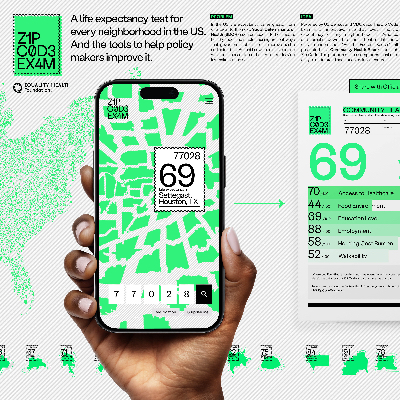
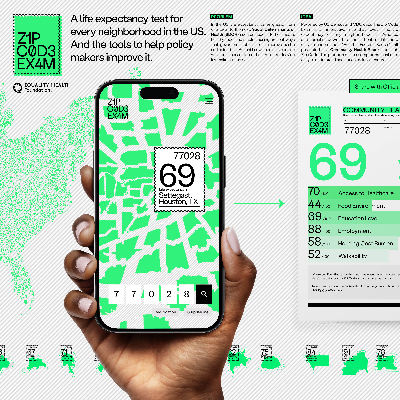
At zipcodeexam.com, users entered their Zip Code and received a personalized life expectancy score and social determinants breakdown. The site compared Zip Codes side-by-side, contextualized disparities, and offered next steps for action, including civic engagement, and community health resources. Users could also download their Community Health Report and share it with their local leaders.
This physical-to-digital loop grounded a systemic issue in deeply personal terms — and opened a path forward.
At zipcodeexam.com, users entered their Zip Code and received a personalized life expectancy score and social determinants breakdown. The site compared Zip Codes side-by-side, contextualized disparities, and offered next steps for action, including civic engagement, and community health resources. Users could also download their Community Health Report and share it with their local leaders.
This physical-to-digital loop grounded a systemic issue in deeply personal terms — and opened a path forward.
Results
The campaign launched in April 2025, and within one week, zipcodeexam.com received traffic from every region where OOH placements were live, totaling 200,000 visits, with over 10,000 Community Health Reports sent to local leaders. The average time spent on the site exceeded 3 minutes — users weren’t just visiting, they were exploring.
Billboards were photographed and shared across social platforms, sparking organic, hyperlocal conversation. Many users posted side-by-side comparisons of their ZIP Code vs. neighboring areas, turning private data into public dialogue.
Most notably, the city of Phoenix and the borough of Queens in New York City have both signed on to implement the Zip Code Exam as a standard part of their annual budgeting process.
While still early in its rollout, the campaign has already shifted the conversation from “Why aren’t people healthier?” to “Why do our systems make health harder?” That mindset shift is where true public health progress begins.
Billboards were photographed and shared across social platforms, sparking organic, hyperlocal conversation. Many users posted side-by-side comparisons of their ZIP Code vs. neighboring areas, turning private data into public dialogue.
Most notably, the city of Phoenix and the borough of Queens in New York City have both signed on to implement the Zip Code Exam as a standard part of their annual budgeting process.
While still early in its rollout, the campaign has already shifted the conversation from “Why aren’t people healthier?” to “Why do our systems make health harder?” That mindset shift is where true public health progress begins.
2026 Awards
Total Points: 3

Merit
Credits
Agency
Area 23 / New York
Media Agency
Rapport / New York
UM / New York
PR / Marketing Agency
Weber Shandwick / New York
Agency In-House Production Company
SRX / New York
Production Company
Dalmatian Cow / Los Angeles
Music / Sound Production Company
Bumblebeat / São Paulo
Post Production Company
Preymaker / New York
Associate Creative Director
Priscilla Ramos
Chief Creative Officer
Tim Hawkey
Group Creative Director
Victor Afonso
Renan Bulgari
Diego Tórgo
Executive Creative Director
Felipe Munhoz
Josh Grossberg
Information Architect
Bill Hanff
Daniel Englert
User Experience Designer
Franklin Williams
Mario Arias
Tati Cantar
Executive Producer
Paul Blake
Chinkara Singh
Stacy Towle
Group Art Supervisor
Taylor Cottrell
Manager, Business Affairs
Heather Hogan
Sr. Manager, Business Affairs/Talent
Kathleen Mendez
Related Awards