The One Show
The One Show is the world's most prestigious award show in advertising and design. For over 50 years, the Gold Pencil has been regarded as one of the top prizes in the creative industry. The One Show has a rich legacy of honoring some of the most groundbreaking ideas, created by some of the most remarkable minds in creativity.
Category
Narrative & World-Building
Annual ID
OS26_IP002G
Background
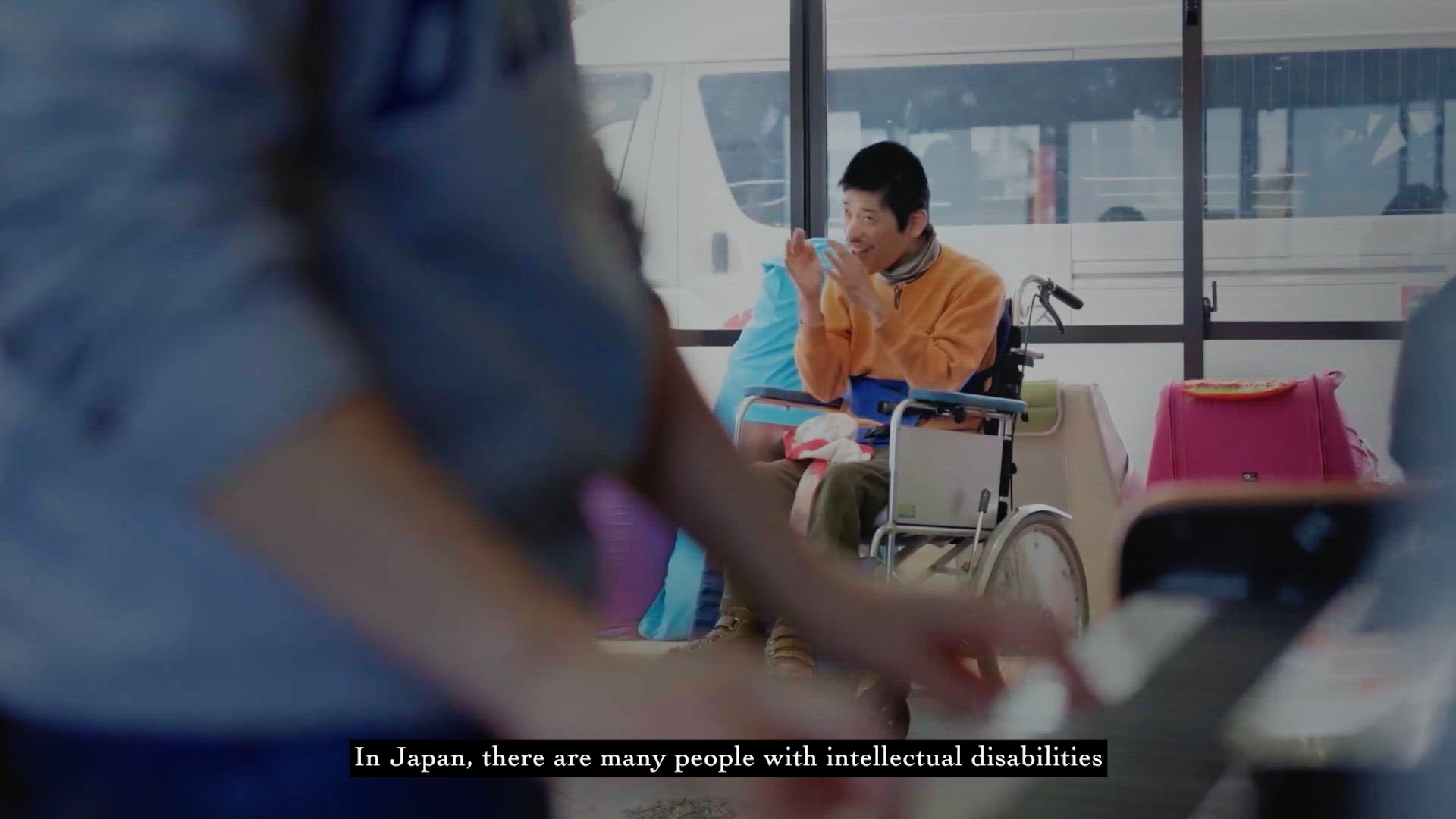
In Japan, many artists with intellectual disabilities create visually powerful and deeply expressive works. Yet for decades, their art has been treated as charity rather than as professional creation. Most works were sold for small donations, leaving the artists unable to make a living from their talent. The average monthly wage for people with severe intellectual disabilities was only ¥16,507 in 2021, revealing a system that offered sympathy instead of opportunity.
The company was founded by twin brothers inspired by their older brother with autism. Growing up alongside him, they witnessed the social and perceptual barriers that people with disabilities face every day. They saw how people with disabilities were mistreated because of their differences, and they wanted to build a world that recognised individuality instead of limitation.
From this belief, the company was created to challenge the unconscious biases that separate people with disabilities from the rest of society. The founders recognised that the issue was not the quality of the art but the perception surrounding it: a widespread belief that art created by people with disabilities belonged to the sphere of welfare rather than culture or commerce. This mindset limited both creative and economic possibilities.
To change this, they set out to build a system where creativity from people with disabilities could be recognised, valued, and integrated into everyday life. By copyrighting and licensing these artworks, and collaborating with companies across fashion, architecture, retail, and public design, the company began transforming how society experiences art.
This is the foundation of HERALBONY’s mission: creativity can go beyond labels, proving that artwork by people with disabilities is not a symbol of charity but a catalyst for creativity, culture, and change.
The company was founded by twin brothers inspired by their older brother with autism. Growing up alongside him, they witnessed the social and perceptual barriers that people with disabilities face every day. They saw how people with disabilities were mistreated because of their differences, and they wanted to build a world that recognised individuality instead of limitation.
From this belief, the company was created to challenge the unconscious biases that separate people with disabilities from the rest of society. The founders recognised that the issue was not the quality of the art but the perception surrounding it: a widespread belief that art created by people with disabilities belonged to the sphere of welfare rather than culture or commerce. This mindset limited both creative and economic possibilities.
To change this, they set out to build a system where creativity from people with disabilities could be recognised, valued, and integrated into everyday life. By copyrighting and licensing these artworks, and collaborating with companies across fashion, architecture, retail, and public design, the company began transforming how society experiences art.
This is the foundation of HERALBONY’s mission: creativity can go beyond labels, proving that artwork by people with disabilities is not a symbol of charity but a catalyst for creativity, culture, and change.
Creative Idea
The creative idea behind HERALBONY was to transform how striking art created by people with disabilities can change how people perceive disability. The company believed that true creativity is shaped by expression rather than by condition, and that art created by people with disabilities could open new ways for people to connect, communicate, and feel.
The company set out to create a new kind of art collection that lives beyond galleries. Each collaboration with a partner company became an opportunity to build a story that reflected both the artist’s creative universe and the brand’s identity. The artworks were not simply licensed or applied but reinterpreted through design, space, and storytelling to create experiences that carried emotional and cultural value. Through this process, they elevated each partnership from a business exchange into a shared act of creation.
From fashion and architecture to hospitality, finance, and public design, these collaborations brought distinctive art into daily life. Each project offered people a moment to see beauty from a different perspective, adding depth and meaning to ordinary experiences. Rather than representing charity or awareness, the works became touchpoints of appreciation and curiosity, enriching the way people engage with the world around them.
At its core, the idea aimed to rewrite how art and disability are perceived, placing artistic talent at the center of cultural value. By presenting these works as part of culture and commerce, HERALBONY built a brand that turns empathy into experience and transforms perception into value.
The company set out to create a new kind of art collection that lives beyond galleries. Each collaboration with a partner company became an opportunity to build a story that reflected both the artist’s creative universe and the brand’s identity. The artworks were not simply licensed or applied but reinterpreted through design, space, and storytelling to create experiences that carried emotional and cultural value. Through this process, they elevated each partnership from a business exchange into a shared act of creation.
From fashion and architecture to hospitality, finance, and public design, these collaborations brought distinctive art into daily life. Each project offered people a moment to see beauty from a different perspective, adding depth and meaning to ordinary experiences. Rather than representing charity or awareness, the works became touchpoints of appreciation and curiosity, enriching the way people engage with the world around them.
At its core, the idea aimed to rewrite how art and disability are perceived, placing artistic talent at the center of cultural value. By presenting these works as part of culture and commerce, HERALBONY built a brand that turns empathy into experience and transforms perception into value.
Insights & Strategy
HERALBONY’s approach began with a simple insight: people are often limited not by their ability but by how society chooses to see them. In Japan, artworks created by people with disabilities were often confined to welfare spaces, treated as charity rather than culture. The founders understood that this perception could change only through experience, not explanation.
Their strategy was to present these artworks within the same cultural landscape as other forms of design and communication. The team carefully curated a growing art collection and created collaborations that allowed each partner brand to tell its own story through the work. These partnerships were designed to reveal both the individuality of each artist and the shared creativity that connects people across differences.
Rather than relying on awareness campaigns, the company built long term relationships with partners across fashion, architecture, retail, finance, and public design. Each collaboration was developed with careful attention to narrative, tone, and visual integrity, ensuring that the art itself remained the centre of every experience.
Through this strategy, they shaped a new model of creative collaboration in Japan. It united social purpose with aesthetic excellence and showed that when creativity is approached with care and respect, it can generate value that goes beyond business, enriching both culture and community.
Their strategy was to present these artworks within the same cultural landscape as other forms of design and communication. The team carefully curated a growing art collection and created collaborations that allowed each partner brand to tell its own story through the work. These partnerships were designed to reveal both the individuality of each artist and the shared creativity that connects people across differences.
Rather than relying on awareness campaigns, the company built long term relationships with partners across fashion, architecture, retail, finance, and public design. Each collaboration was developed with careful attention to narrative, tone, and visual integrity, ensuring that the art itself remained the centre of every experience.
Through this strategy, they shaped a new model of creative collaboration in Japan. It united social purpose with aesthetic excellence and showed that when creativity is approached with care and respect, it can generate value that goes beyond business, enriching both culture and community.
Execution
HERALBONY’s execution was defined by craft, curation, and brand consistency. Every decision, from the selection of artworks to their placement in space and product, was guided by the belief that creativity should be experienced as part of daily life. The team built a system that treated art with the same precision and respect as any high-end design process.
Each collaboration was developed through close dialogue between artists, curators, and partner companies. Rather than applying artworks as decoration, they translated each piece into a story carrying emotional and cultural meaning. These collaborations extended across multiple industries and media, from fashion and architecture to film, retail, finance, and public design, turning everyday environments into living galleries that celebrate creativity and inclusion.
The brand’s visual language remained minimal and understated, allowing the artwork to speak for itself. Photography, film, exhibitions, and spatial design were used not to explain but to immerse audiences in the world of the artists. This quiet approach became part of the company’s strength, expressing authenticity through simplicity and space.
Their execution combined social intention with design excellence. By presenting high-quality art through refined storytelling, the team created experiences that deepened empathy without sentimentality. Each project demonstrated how art, when treated as culture rather than charity, can enrich environments, elevate brands, and inspire people to see and connect in new ways.
Each collaboration was developed through close dialogue between artists, curators, and partner companies. Rather than applying artworks as decoration, they translated each piece into a story carrying emotional and cultural meaning. These collaborations extended across multiple industries and media, from fashion and architecture to film, retail, finance, and public design, turning everyday environments into living galleries that celebrate creativity and inclusion.
The brand’s visual language remained minimal and understated, allowing the artwork to speak for itself. Photography, film, exhibitions, and spatial design were used not to explain but to immerse audiences in the world of the artists. This quiet approach became part of the company’s strength, expressing authenticity through simplicity and space.
Their execution combined social intention with design excellence. By presenting high-quality art through refined storytelling, the team created experiences that deepened empathy without sentimentality. Each project demonstrated how art, when treated as culture rather than charity, can enrich environments, elevate brands, and inspire people to see and connect in new ways.
Results
The transformation produced measurable business, cultural, and social outcomes. While sales revenue growth has been strong, the impact on artists has grown at an even faster rate. Between 2021 and 2025, royalties paid to artists increased 15.6 times, enabling several to achieve financial independence for the first time. More than 130 companies collaborated with the brand across industries including fashion, hospitality, retail, finance, and architecture. This network created a stable and recurring source of revenue and built lasting partnerships grounded in shared purpose.
The brand’s archive of over 2,000 artworks became a growing creative asset, supporting continuous licensing, exhibitions, and spatial design projects. The company’s approach proved that inclusion and profitability can coexist through design quality and cultural authenticity. Corporate partners reported stronger brand perception and positive consumer response after collaborating with them. The partnerships inspired internal engagement and pride while also enhancing public reputation, as audiences recognised the authenticity and social value behind each collaboration.
In 2024, the company expanded internationally, opening its European base to bring its mission to a global stage and to collaborate with partners who shared its belief in the power of art and storytelling to connect people and create change.
Beyond business results, the transformation has helped reshape public perception of disability in Japan. By placing artworks once confined to welfare spaces at the centre of design and culture, the company invited society to see artists with disabilities as professional creators whose work enriches the world around them. This shift in recognition, from sympathy to respect, continues to grow both within Japan and beyond, showing that creativity has the power to expand what people believe is possible.
The brand’s archive of over 2,000 artworks became a growing creative asset, supporting continuous licensing, exhibitions, and spatial design projects. The company’s approach proved that inclusion and profitability can coexist through design quality and cultural authenticity. Corporate partners reported stronger brand perception and positive consumer response after collaborating with them. The partnerships inspired internal engagement and pride while also enhancing public reputation, as audiences recognised the authenticity and social value behind each collaboration.
In 2024, the company expanded internationally, opening its European base to bring its mission to a global stage and to collaborate with partners who shared its belief in the power of art and storytelling to connect people and create change.
Beyond business results, the transformation has helped reshape public perception of disability in Japan. By placing artworks once confined to welfare spaces at the centre of design and culture, the company invited society to see artists with disabilities as professional creators whose work enriches the world around them. This shift in recognition, from sympathy to respect, continues to grow both within Japan and beyond, showing that creativity has the power to expand what people believe is possible.
2026 Awards
Total Points: 45

Gold Pencil

Credits
Agency
HERALBONY Co., Ltd / Morioka
Dentsu Inc. / Tokyo
Art Director
Sakura Yamaguchi
Creative Director
Kinami Hasegawa
Tomoyuki Kuwayama
Executive Creative Director
Noriaki Onoe
Noritaka Kobuse
Producer
Yukiko Matsue
Yuko Arai
Executive Producer
Seiichi Masuhara
Associate Project Manager
Yuka Yamazaki
Branding Director
Takahiko Inoue
Business Producer
Ryoto Aoi
Yoshiaki Takai
Co-Founder
Fumito Matsuda
Takaya Matsuda
Creative Advisor
Kazuomi Goto
Ryohei Manabe
Creative Producer
Aki Daisho
Investment Lead
Kotaro Sasamoto
Yuka Okada
Planner
Rise Miyamoto
Yuhi Suzuki
public relations
Naho Ando
Related Awards