The One Show
The One Show is the world's most prestigious award show in advertising and design. For over 50 years, the Gold Pencil has been regarded as one of the top prizes in the creative industry. The One Show has a rich legacy of honoring some of the most groundbreaking ideas, created by some of the most remarkable minds in creativity.

Category
Reputation Management
Annual ID
OS26_PR031M
Background
PARKSIDE by Lidl is a discount power-tool brand with strong sales—but a persistent perception problem: across reviews, forums, and social comments, the tools are regularly dismissed as “cheap,” and therefore assumed to be weak or unreliable. In a category where trust is built through performance proof and peer recommendation, that skepticism doesn’t stay online—it directly impacts consideration.
The challenge was cultural as much as commercial. In DIY communities across Europe, “quality” is often treated as a price signal: if it costs less, it must do less. That bias is amplified by creator culture and comment-driven platforms, where strong opinions spread faster than facts. For PARKSIDE, this meant competing not only against premium brands, but against a widely held mindset: discount tools are fine for small tasks, not serious jobs.
The initial brief was to shift this perception and build trust at scale—without relying on brand claims or controlled demonstrations that audiences could dismiss as advertising. We needed proof that felt native to the conversation, was publicly verifiable, and couldn’t be explained away.
So we met the bias where it lived: in the comment section. Instead of correcting doubt, we turned it into a public wager and let the internet set the challenge—creating an undeniable performance moment designed to travel from social debate into mainstream culture.
The challenge was cultural as much as commercial. In DIY communities across Europe, “quality” is often treated as a price signal: if it costs less, it must do less. That bias is amplified by creator culture and comment-driven platforms, where strong opinions spread faster than facts. For PARKSIDE, this meant competing not only against premium brands, but against a widely held mindset: discount tools are fine for small tasks, not serious jobs.
The initial brief was to shift this perception and build trust at scale—without relying on brand claims or controlled demonstrations that audiences could dismiss as advertising. We needed proof that felt native to the conversation, was publicly verifiable, and couldn’t be explained away.
So we met the bias where it lived: in the comment section. Instead of correcting doubt, we turned it into a public wager and let the internet set the challenge—creating an undeniable performance moment designed to travel from social debate into mainstream culture.
Creative Idea
The creative idea was to turn the internet’s scepticism into the campaign’s engine—and replace brand claims with a single, undeniable act of proof.
PARKSIDE is often dismissed online as “cheap,” and therefore assumed to be weak. Instead of arguing back with ads, we treated the comment section as the brief. We asked a simple question: What do you reckon a “discount” drill can pull? As the community escalated the challenge, we selected the boldest “no way” comment—claiming it couldn’t pull an Airbus A380—and bet on ourselves.
From there, we built a multi-stage, social-first story that made “proof” the entertainment. The audience wasn’t just watching a demo; they were placing bets, following the build, and pushing the stakes higher. Transparency became the hook: engineering preparation, prototypes, and controlled tests were documented step by step, supported by TU Darmstadt, and overseen by independent verification—so the result couldn’t be dismissed as a trick.
The payoff was a live, rules-based moment: one 12V cordless drill pulling a 315,000 kg Airbus A380 by 143 cm—certified by Guinness World Records. A troll comment became a world-record product demo, transforming doubt into record-breaking trust and giving a discount brand the most premium proof possible.
PARKSIDE is often dismissed online as “cheap,” and therefore assumed to be weak. Instead of arguing back with ads, we treated the comment section as the brief. We asked a simple question: What do you reckon a “discount” drill can pull? As the community escalated the challenge, we selected the boldest “no way” comment—claiming it couldn’t pull an Airbus A380—and bet on ourselves.
From there, we built a multi-stage, social-first story that made “proof” the entertainment. The audience wasn’t just watching a demo; they were placing bets, following the build, and pushing the stakes higher. Transparency became the hook: engineering preparation, prototypes, and controlled tests were documented step by step, supported by TU Darmstadt, and overseen by independent verification—so the result couldn’t be dismissed as a trick.
The payoff was a live, rules-based moment: one 12V cordless drill pulling a 315,000 kg Airbus A380 by 143 cm—certified by Guinness World Records. A troll comment became a world-record product demo, transforming doubt into record-breaking trust and giving a discount brand the most premium proof possible.
Insights & Strategy
The core insight was that in the DIY category, perception is built in public. Reviews, forums, and social comments don’t just reflect brand reputation—they actively create it. For a discount tool brand, the most common bias is simple and stubborn: lower price equals lower performance. And because it’s repeated by peers and creators, it carries more weight than any brand claim.
Our strategic decision was therefore to stop “telling” and start “proving”—in the exact place where the bias lived. Instead of countering skepticism with controlled, brand-led demonstrations, we turned skepticism into a participation mechanic: a public wager driven by the community. If we could make doubters set the challenge, and then beat it transparently, the proof would feel earned, not advertised.
The strategy combined three elements:
Social-first escalation: We designed a multi-stage narrative that started with a simple provocation (“What can a discount drill pull?”) and let the community raise the stakes. This created anticipation, repeat engagement, and a shared goal.
Radical credibility: Because extraordinary claims invite doubt, verification became part of the idea. Engineering prep, prototypes, and controlled rig tests were documented end-to-end, supported by TU Darmstadt, and overseen through independent certification—turning transparency into the story.
One undeniable climax, built to travel: The campaign culminated in a live, rules-based attempt—one cordless drill pulling an Airbus A380—creating a single, verifiable moment that could move seamlessly from social hype to earned news and high-reach media.
The intended purpose was to convert online doubt into measurable trust, reposition PARKSIDE as serious performance at a smart price, and create a proof point strong enough to shift category perception.
Our strategic decision was therefore to stop “telling” and start “proving”—in the exact place where the bias lived. Instead of countering skepticism with controlled, brand-led demonstrations, we turned skepticism into a participation mechanic: a public wager driven by the community. If we could make doubters set the challenge, and then beat it transparently, the proof would feel earned, not advertised.
The strategy combined three elements:
Social-first escalation: We designed a multi-stage narrative that started with a simple provocation (“What can a discount drill pull?”) and let the community raise the stakes. This created anticipation, repeat engagement, and a shared goal.
Radical credibility: Because extraordinary claims invite doubt, verification became part of the idea. Engineering prep, prototypes, and controlled rig tests were documented end-to-end, supported by TU Darmstadt, and overseen through independent certification—turning transparency into the story.
One undeniable climax, built to travel: The campaign culminated in a live, rules-based attempt—one cordless drill pulling an Airbus A380—creating a single, verifiable moment that could move seamlessly from social hype to earned news and high-reach media.
The intended purpose was to convert online doubt into measurable trust, reposition PARKSIDE as serious performance at a smart price, and create a proof point strong enough to shift category perception.
Execution
Execution was designed as a social-first build that turned proof into entertainment—while making every claim verifiable.
Craft & tone:
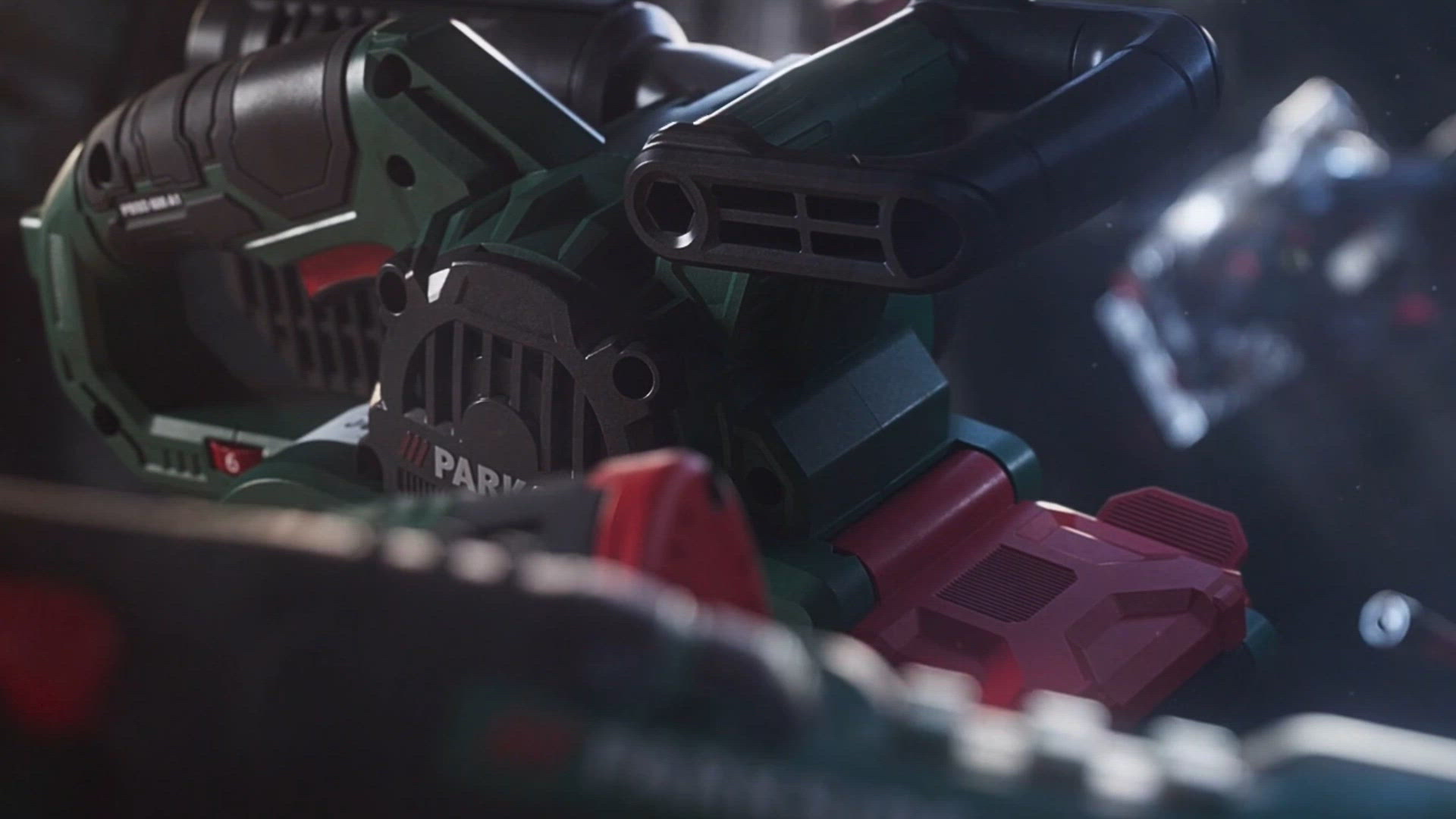
The tone blended internet challenge culture with documentary-level transparency: playful provocation (“no way”) matched with rigorous, step-by-step engineering. Content was produced in clear chapters—setup, escalation, testing, and the final attempt—so audiences could follow the logic and feel the stakes rise. Visual craft focused on “showing the work”: close-up detail of the drill, rig, cable, and measurement; wide shots that communicated scale; and straightforward graphics that clarified rules, weight, distance, and verification.
Placement & format:
We used short-form, creator-amplified episodes to drive participation and betting hype, then built toward a single “appointment viewing” climax: a live, rules-based record attempt. The campaign was structured to reward return viewing—each phase answered one question and opened the next, keeping the audience invested in the outcome.
Credibility by design:
Because extraordinary claims invite skepticism, independent oversight was integrated into the execution, not added afterward. Engineering preparation included prototypes and controlled rig tests, supported by TU Darmstadt, and documented end-to-end. The final event was staged with clear, public rules and official certification—so the result couldn’t be dismissed as a trick or edit.
The final moment:
The payoff was executed as a live attempt in a Lufthansa hangar in Munich, designed for maximum “proof value”: one 12V cordless drill connected via a steel cable pulling a 306,000 kg Airbus A380 by 143 cm. The live stream and cutdowns were edited into modular assets to scale across markets and channels, ensuring the verified moment traveled from social conversation into earned news and mass reach.
This execution turned a comment into a credible spectacle—proof people could watch, share, and trust.
Craft & tone:
The tone blended internet challenge culture with documentary-level transparency: playful provocation (“no way”) matched with rigorous, step-by-step engineering. Content was produced in clear chapters—setup, escalation, testing, and the final attempt—so audiences could follow the logic and feel the stakes rise. Visual craft focused on “showing the work”: close-up detail of the drill, rig, cable, and measurement; wide shots that communicated scale; and straightforward graphics that clarified rules, weight, distance, and verification.
Placement & format:
We used short-form, creator-amplified episodes to drive participation and betting hype, then built toward a single “appointment viewing” climax: a live, rules-based record attempt. The campaign was structured to reward return viewing—each phase answered one question and opened the next, keeping the audience invested in the outcome.
Credibility by design:
Because extraordinary claims invite skepticism, independent oversight was integrated into the execution, not added afterward. Engineering preparation included prototypes and controlled rig tests, supported by TU Darmstadt, and documented end-to-end. The final event was staged with clear, public rules and official certification—so the result couldn’t be dismissed as a trick or edit.
The final moment:
The payoff was executed as a live attempt in a Lufthansa hangar in Munich, designed for maximum “proof value”: one 12V cordless drill connected via a steel cable pulling a 306,000 kg Airbus A380 by 143 cm. The live stream and cutdowns were edited into modular assets to scale across markets and channels, ensuring the verified moment traveled from social conversation into earned news and mass reach.
This execution turned a comment into a credible spectacle—proof people could watch, share, and trust.
Results
Results were anchored by an indisputable proof moment: a single PARKSIDE 12V cordless drill pulled a 315-ton Airbus A380 by 143 cm, earning an official Guinness World Records title.
The verified stunt then scaled into a Europe-wide performance and perception shift:
315M media impressions
+222,603 new followers during the stunt period
+91% revenue growth
70+ localized assets deployed across 8 countries, spanning earned media, social, TV, print, cinema, and high-impact OOH
Beyond the metrics, the work transformed online doubt into public, shareable proof—turning “cheap = weak” into record-breaking trust.
The verified stunt then scaled into a Europe-wide performance and perception shift:
315M media impressions
+222,603 new followers during the stunt period
+91% revenue growth
70+ localized assets deployed across 8 countries, spanning earned media, social, TV, print, cinema, and high-impact OOH
Beyond the metrics, the work transformed online doubt into public, shareable proof—turning “cheap = weak” into record-breaking trust.
2026 Awards
Total Points: 3

Merit

Credits
Agency
Havas Germany / Havas Social
Client / Brand
Lidl Stiftung & Co. KG / Neckarsulm
Music / Sound Production Company
Mr. Pink Music
Chief Creative Officer
Eric Schoeffler
Group Creative Director
Oliver Hilbring
Matthieu Bouilhot
Executive Creative Director
Torsten Pollmann
Producer
Helge Forler
Social Media Manager
Amelie Raber
Camilla Sprengler
Celine Seeler
Daniel Rest
Laman Safarli
Senior Art Director
Jan Luzar
3D Artist
Max Alber
Chief Excecutive Officer
Stephan Lachmann
Director Business Operations
Katrin Endres
Director Marketing International
Matthias Bender
Director Social Production
Moritz Hausdoerfer
Editor and motion designer
Felipe Jardim
Global Awards Director
Sophie Lacheze
Global Awards Producer
Felipe Silvani
Head of Production
Nadine Baltes
Influencer Relations Manager
Steven Schauer
Junior PR Consultant
Selina Roos
Junior Video Editor
Jana Vetter
Junior Videographer
Alexandra Schleicher
Mert Sezer
Managing Director PR
Christiane Bruszis
PR Strategy
Jan Walenda
Production director
Ana Paula Casagrande
Senior Digital Marketing Manager
Goeksel Can Goezener
Senior Videographer
Janis Juelch
Social Media & Influencer Relations Manager
Paula Medert
Teamlead Social Media
Corinna Witzsch
Teamlead Video/ Content Production
Michael Jung
Teamleiter Parkside Brand Strategy
Florian Walz
University
TU Darmstadt / Darmstadt
Videographer
Karim Abdelghany
Maximilan Sueß
Related Awards
![[Censored Truth]](https://d2z00kf51ll94q.cloudfront.net//archive/2026/thumbs/OS26_PR015B.jpg)