The One Show
The One Show is the world's most prestigious award show in advertising and design. For over 50 years, the Gold Pencil has been regarded as one of the top prizes in the creative industry. The One Show has a rich legacy of honoring some of the most groundbreaking ideas, created by some of the most remarkable minds in creativity.

Category
Print & Promotional for Good
Annual ID
OS26_PT028M
Background
Back Market was born in Paris in 2014 with a utopian vision: to end planned obsolescence and rampant overconsumption in tech. It pioneered the refurbished electronics category in France, expanded across Europe, and entered the U.S. market, reaching a $5.7bn valuation by 2022. Refurbished devices have become a credible and growing alternative, yet the dominant culture still favors buying new.
The environmental cost of this behavior is staggering. Consumer electronics already account for 4% of global greenhouse gas emissions, projected to rise to 14% by 2040—more than aviation. 80% of those emissions occur before a device is even used. Yet smartphones are replaced every two years on average, often for superficial reasons.
In a world suffocating under ecological pressure, can we still afford to swap our phones like fashion accessories? What if the solution isn’t the next innovation, but the phone already in our pocket—locked away, hard to repair, designed to die?
Back Market’s ambition is to challenge speed as the default setting of the tech industry. To slow down the machinery of obsolescence. To defend the right to repair as a fundamental right in tech. Because today, repairing is more than fixing devices—it is an act of resistance against the obsolescence of life itself.
A contextual challenge: in a time of ecological fatigue, and an era when environmental issues were being sidelined from the political agenda, breaking through required more than facts—it demanded narrative clarity and cultural punch.
The environmental cost of this behavior is staggering. Consumer electronics already account for 4% of global greenhouse gas emissions, projected to rise to 14% by 2040—more than aviation. 80% of those emissions occur before a device is even used. Yet smartphones are replaced every two years on average, often for superficial reasons.
In a world suffocating under ecological pressure, can we still afford to swap our phones like fashion accessories? What if the solution isn’t the next innovation, but the phone already in our pocket—locked away, hard to repair, designed to die?
Back Market’s ambition is to challenge speed as the default setting of the tech industry. To slow down the machinery of obsolescence. To defend the right to repair as a fundamental right in tech. Because today, repairing is more than fixing devices—it is an act of resistance against the obsolescence of life itself.
A contextual challenge: in a time of ecological fatigue, and an era when environmental issues were being sidelined from the political agenda, breaking through required more than facts—it demanded narrative clarity and cultural punch.
Creative Idea
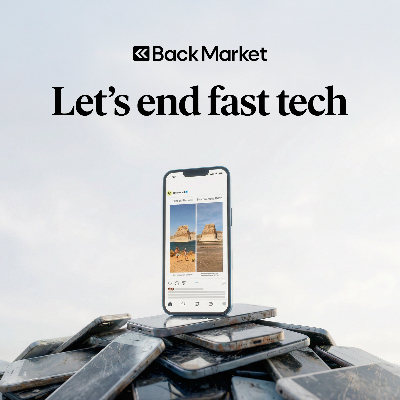
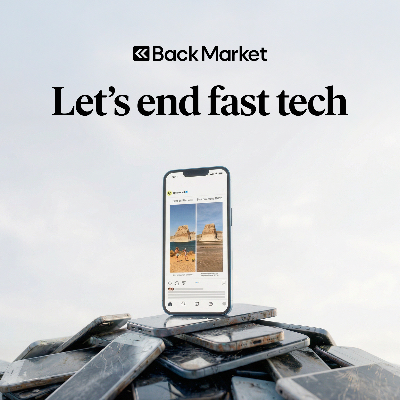
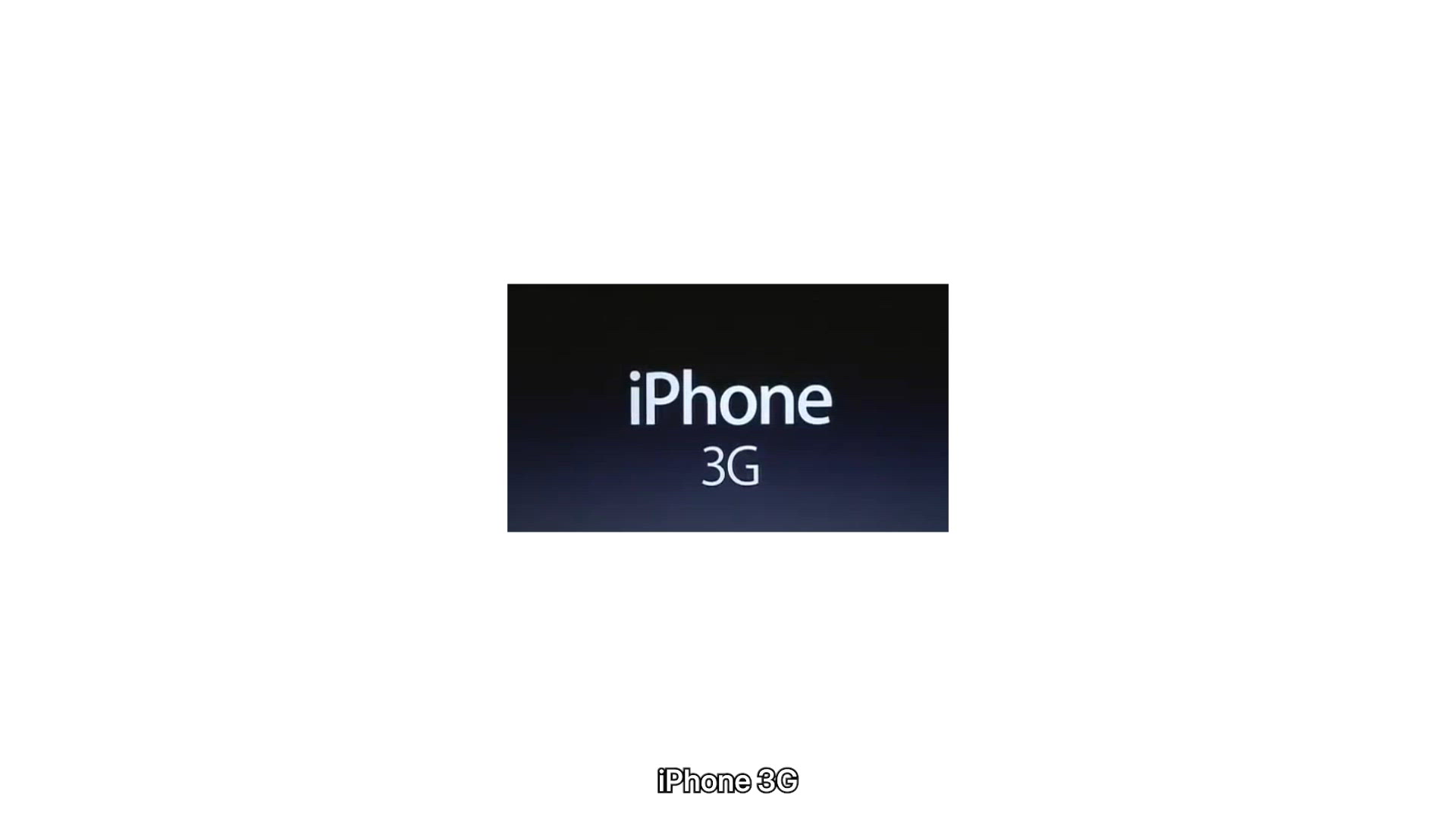
The creative idea was to subvert Apple’s famous “Shot on iPhone” campaign to dramatize the environmental cost of Fast Tech and make an invisible issue visible in the most public and shareable way.
Each execution paired striking before-and-after images of climate damage—melting glaciers, flooded cities, dried lakes—with the timeline of iPhone upgrades. The juxtaposition revealed a simple truth: while consumers upgraded their devices, the planet degraded.
The line “How many upgrades do we have left?” crystallized the urgency, while the call to action “Let’s end Fast Tech” named the problem and invited people to slow down – and ultimately explore ways to reuse, repair, and refurbish their devices.
The tone was carefully calibrated: not accusatory, but revealing. Not anti-tech, but anti-upgrade culture. By using Apple’s visual language as a Trojan horse, the campaign created instant recognition. The twist was subtle enough to disarm, but sharp enough to provoke reflection and spark cultural conversation across borders.
Each execution paired striking before-and-after images of climate damage—melting glaciers, flooded cities, dried lakes—with the timeline of iPhone upgrades. The juxtaposition revealed a simple truth: while consumers upgraded their devices, the planet degraded.
The line “How many upgrades do we have left?” crystallized the urgency, while the call to action “Let’s end Fast Tech” named the problem and invited people to slow down – and ultimately explore ways to reuse, repair, and refurbish their devices.
The tone was carefully calibrated: not accusatory, but revealing. Not anti-tech, but anti-upgrade culture. By using Apple’s visual language as a Trojan horse, the campaign created instant recognition. The twist was subtle enough to disarm, but sharp enough to provoke reflection and spark cultural conversation across borders.
Insights & Strategy
Fact: People are increasingly climate-conscious, yet do not connect their personal devices to the problem. Tech pollution is not top of mind, and terms like “electronic waste” feel abstract and distant.
Cultural insight: The tech industry has normalized a hyper-accelerated replacement cycle. Planned obsolescence, software decay, unrepairable hardware—everything is designed to push the next upgrade. Consumers, conditioned by marketing and novelty, have come to accept this pace as progress.
Challenge: Redefine the narrative of “progress through tech consumption.” Sound the alarm without alienating. Hold up a critical mirror while building emotional buy-in and mass cultural resonance.
Strategic approach: Back Market created a Brand Activism Department to go beyond marketing into systemic advocacy—lobbying for legislation, forging partnerships, and staging cultural interventions. It coined the term “Fast Tech” to name and frame the problem, and launched a campaign that subverted category conventions to dramatize the issue, spark public debate and draw attention to the sustainable practices of “reuse, repair, refurbish”.
Cultural insight: The tech industry has normalized a hyper-accelerated replacement cycle. Planned obsolescence, software decay, unrepairable hardware—everything is designed to push the next upgrade. Consumers, conditioned by marketing and novelty, have come to accept this pace as progress.
Challenge: Redefine the narrative of “progress through tech consumption.” Sound the alarm without alienating. Hold up a critical mirror while building emotional buy-in and mass cultural resonance.
Strategic approach: Back Market created a Brand Activism Department to go beyond marketing into systemic advocacy—lobbying for legislation, forging partnerships, and staging cultural interventions. It coined the term “Fast Tech” to name and frame the problem, and launched a campaign that subverted category conventions to dramatize the issue, spark public debate and draw attention to the sustainable practices of “reuse, repair, refurbish”.
Execution
The right craft:
All executions used manually sourced, authentic before-and-after photographs of climate impact, dated to the exact periods referenced in the campaign. Each location was selected for both its visual impact and its relevance to the market, giving the message credibility, immediacy, and local resonance.
The right moment: Earth Month.
A cultural and media moment when environmental issues naturally surface in public debate and audiences are more receptive to climate-related messages. It also offered a competitive advantage: direct competitors were largely absent from the conversation, allowing Back Market to occupy the space clearly and consistently.
The right places:
Print played a central role in establishing credibility and authority. Ads ran in major national newspapers such as Le Monde and Le Nouvel Obs in France, The Guardian in the UK, El País in Spain, and The New York Times in the US, including a manifesto-style execution. These environments were chosen for their influence on public discourse and opinion leaders. By echoing the visual codes of Apple’s historic print work, the subversion was instantly recognizable while gaining institutional legitimacy.
To make the issue public and unavoidable, the campaign also ran in premium outdoor placements in major cities—Paris, London, Madrid, Hamburg, and New York.
Digital and social media acted as the campaign’s conversational fuel. Content paired the campaign’s visuals with clear, non-judgmental explanations of “Fast Tech,” grounded by expert voices and amplified by journalists, creators, and sustainability advocates.
All assets redirected audiences to a dedicated platform offering educational content and practical tools to help people reuse, repair, and refurbish their devices.
A tightly orchestrated media system: social fueled the conversation, outdoor made it unavoidable, and print gave it authority—allowing a limited budget to deliver outsized cultural impact.
All executions used manually sourced, authentic before-and-after photographs of climate impact, dated to the exact periods referenced in the campaign. Each location was selected for both its visual impact and its relevance to the market, giving the message credibility, immediacy, and local resonance.
The right moment: Earth Month.
A cultural and media moment when environmental issues naturally surface in public debate and audiences are more receptive to climate-related messages. It also offered a competitive advantage: direct competitors were largely absent from the conversation, allowing Back Market to occupy the space clearly and consistently.
The right places:
Print played a central role in establishing credibility and authority. Ads ran in major national newspapers such as Le Monde and Le Nouvel Obs in France, The Guardian in the UK, El País in Spain, and The New York Times in the US, including a manifesto-style execution. These environments were chosen for their influence on public discourse and opinion leaders. By echoing the visual codes of Apple’s historic print work, the subversion was instantly recognizable while gaining institutional legitimacy.
To make the issue public and unavoidable, the campaign also ran in premium outdoor placements in major cities—Paris, London, Madrid, Hamburg, and New York.
Digital and social media acted as the campaign’s conversational fuel. Content paired the campaign’s visuals with clear, non-judgmental explanations of “Fast Tech,” grounded by expert voices and amplified by journalists, creators, and sustainability advocates.
All assets redirected audiences to a dedicated platform offering educational content and practical tools to help people reuse, repair, and refurbish their devices.
A tightly orchestrated media system: social fueled the conversation, outdoor made it unavoidable, and print gave it authority—allowing a limited budget to deliver outsized cultural impact.
Results
The campaign delivered impact well beyond expectations:
* 800M+ estimated cross-media impressions
* Coverage in 200+ press articles and influencer posts
* 11M+ organic reach on Social Media
* 780K+ social interactions (record engagement for Back Market on social)
The term “Fast Tech” entered both media and consumer language, cited by journalists, influencers, and NGOs. Activist groups referenced the campaign in their own communications, extending its reach into civil society.
While not designed to drive immediate sales, the campaign reinforced Back Market’s brand stature and cultural relevance. More importantly, it marked the first step in the company’s activist journey, laying the groundwork for future initiatives that go beyond refurbished tech.
* 800M+ estimated cross-media impressions
* Coverage in 200+ press articles and influencer posts
* 11M+ organic reach on Social Media
* 780K+ social interactions (record engagement for Back Market on social)
The term “Fast Tech” entered both media and consumer language, cited by journalists, influencers, and NGOs. Activist groups referenced the campaign in their own communications, extending its reach into civil society.
While not designed to drive immediate sales, the campaign reinforced Back Market’s brand stature and cultural relevance. More importantly, it marked the first step in the company’s activist journey, laying the groundwork for future initiatives that go beyond refurbished tech.
2026 Awards
Total Points: 3

Merit
Credits
Agency
Marcel / Paris
Client / Brand
Back Market / Paris
Production Company
Artisans du Film / Paris
Music / Sound Production Company
Midi Agency / Paris
Chief Marketing Officer
Joy Howard
Group Creative Director
Pierre Mottais
Virgile Lassalle
Editor
Pascaline Blanchecotte
Executive Creative Director
Clément Sechet
Dan Brill
Motion Designer
Julien Taillez
Pierre-Yves Rambaud
Sorya Lepage
Producer
Sixtine Busetti
Valéry du Peloux
Social Media Manager
Gabriel Hermelin
CEO & CCO
Gaëtan du Peloux
Youri Guerassimov
Head of Social Media
Charlotte Giraud-Charreyron
Account Manager
Alexis Mouchot
Activism Project Manager
Léonie Vigier
Amplification Creative
Florian Portero
Laura Cepa
Morgane Prottengeier
Naim Souilem
Robin Lassalle
Associate Director
Barbara Cruchet
Brand Project manager France
Camille Watine
Brand project manager Spain
Gina Valdivieso
Campaign Creative
Benoit Vangilve
Maxime Cavigny
Co-President
Pascal Nessim
Color Grading
Nicolas Lossec
Copywriter DE
Michael Jahn
Copywriter FR
Amélie Cabelguen
Director Global Brand
Woody Wright
Expert Global Editor
India Blue
Expert Marketing Manager US
Bridie Mcphie
General Manager
Sebastien Jauffret
Global Communications & PR
Graham James
Group Account Manager
Quentin Seguret
Head of Brand Activism
Nina Quellier
Head of EU Marketing
Alexandra Brandt
Head of EU Public Relations
Marine Libaud
Head of Marketing FR
Quentin Vandegucht
Head of Marketing Spain
Marta Castillo Sampedro
Head of Marketing UK
Luke Forshaw
Head of Marketing US
Amanda Michel
Image Research
Aurélie Hyson
Pascaline Blanchecotte
Layout Artist
Christophe Gillon
Mathieu Andrieu
Media Campaign Planner
Capucine Courgenoux
Pint Producer
Suzanne Pereira Diaz
Senior Brand Video Content Creator
Jeremy de Masi
Senior EU Social Strategist
Diane Tamalet
Senior Lead Copywriter
Clare Austen-Smith
Senior Lead Creative Operations
Hannah Laloum
Senior Lead Media
Meryl Teste
Senior Media Project Manager
Adèle Simon
Jana Rickert
Social Media Creative Lead
Calliste Garrabos
Strategic planner
Thomas Cléret
VP Global Brand
John Goodwin
Related Awards