The One Show
The One Show is the world's most prestigious award show in advertising and design. For over 50 years, the Gold Pencil has been regarded as one of the top prizes in the creative industry. The One Show has a rich legacy of honoring some of the most groundbreaking ideas, created by some of the most remarkable minds in creativity.
Category
Livestream
Annual ID
OS26_SM034M
Background
Meta pioneered mixed reality through the Meta Quest lineup but as competition grew, future growth depended on winning new audiences - starting with gamers. This led to a partnership with Xbox on a limited-edition Quest, yet gamers still doubted its credibility and potential. It offered no new features and it was more expensive than the regular Quest, giving no rational reason to buy. With limited budgets and no technical innovation to lean on, we knew we’d never win with a standard product launch
Creative Idea
The Meta Quest 3S XBOX Edition boasted a massive 26-foot virtual screen to game on.
To match that supersized scale, we took the most famous backgrounds on the internet, the iconic bedrooms of mega-streamers AMP and Kai Cenat, and physically supersized them into a giant set.
We hijacked the opening of their 30 day streaming marathon, giving a supersized start to what would become an iconic cultural event.
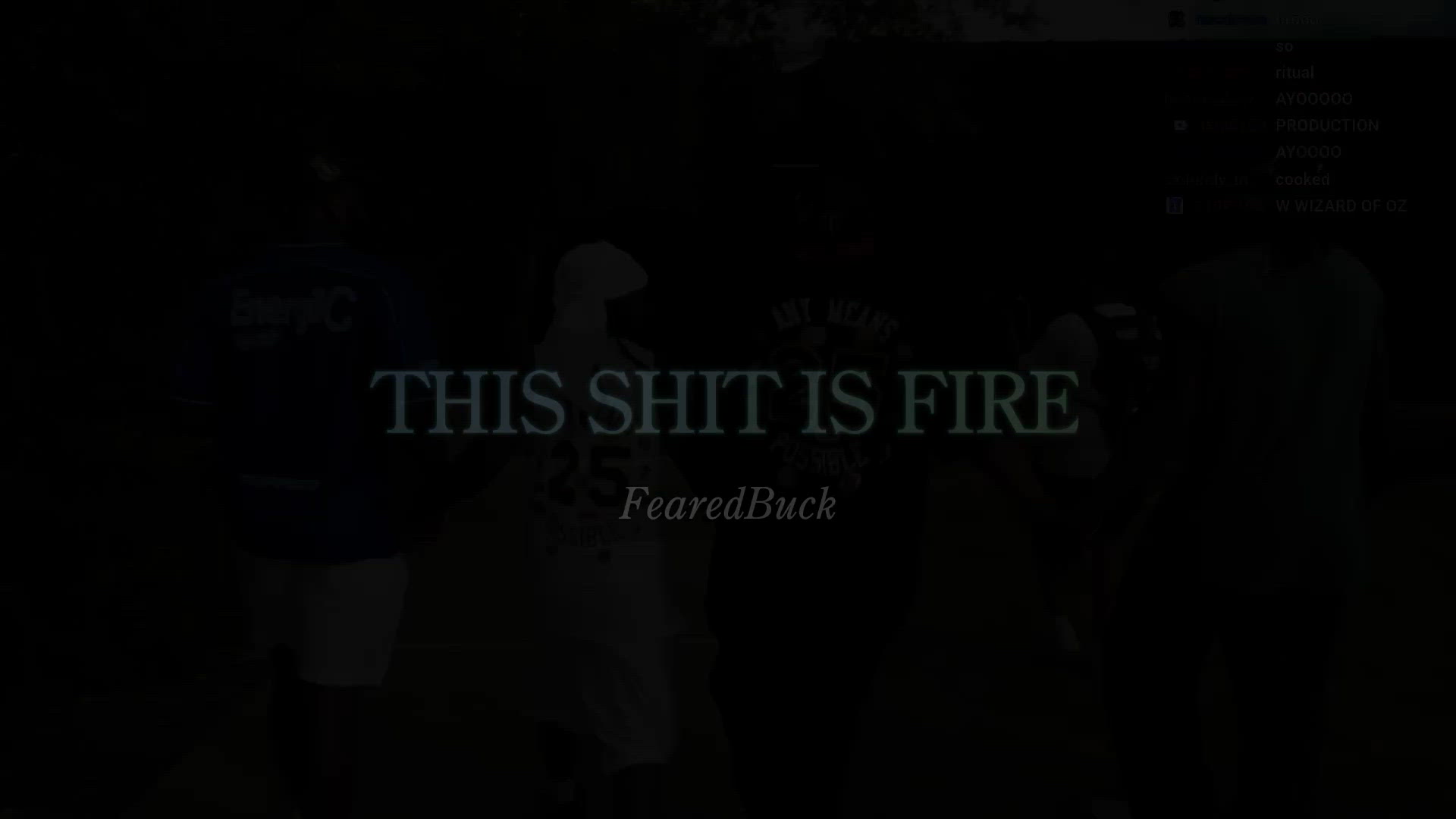
Inside the supersized room, we staged an hour-long interactive theatre show on Twitch. The main cast was entirely unscripted with no clue what was coming, while the live audience could interact to unleash even more chaos.
Throughout the livestream, iconic gaming characters from Halo, Elder Scrolls, Fortnite and Assassins Creed crashed into the scene. We kept them entertained with supersized props from their original bedrooms including giant arcade machines, basketballs, weapons and Kai Cenat’s famously beaten up old chair.. And of course we kept them fed with a supersized pizza.
The supersized stream was designed and written from the beginning to be clipped by fans to repost throughout the internet, setting off viral dominoes, and it did exactly that
To match that supersized scale, we took the most famous backgrounds on the internet, the iconic bedrooms of mega-streamers AMP and Kai Cenat, and physically supersized them into a giant set.
We hijacked the opening of their 30 day streaming marathon, giving a supersized start to what would become an iconic cultural event.
Inside the supersized room, we staged an hour-long interactive theatre show on Twitch. The main cast was entirely unscripted with no clue what was coming, while the live audience could interact to unleash even more chaos.
Throughout the livestream, iconic gaming characters from Halo, Elder Scrolls, Fortnite and Assassins Creed crashed into the scene. We kept them entertained with supersized props from their original bedrooms including giant arcade machines, basketballs, weapons and Kai Cenat’s famously beaten up old chair.. And of course we kept them fed with a supersized pizza.
The supersized stream was designed and written from the beginning to be clipped by fans to repost throughout the internet, setting off viral dominoes, and it did exactly that
Insights & Strategy
The limited-edition Meta Quest 3S Xbox Edition was built for one audience: Xbox gamers. But gamers are among the most discerning players in culture, and to them, Quest wasn’t “real gaming.” It was a novelty rather than a necessity. They loved Xbox, but they didn’t love Meta.
This created a clear tension. Meta had built a device for gamers who didn’t believe in the category or the brand. To succeed, we needed to shift perception from “this isn’t for me” to “this belongs in gaming.” That meant earning credibility in one of the hardest spaces to fake: gaming culture, by showing up on gamers’ turf, through creators and platforms they already trusted.
When we examined why Xbox gamers buy new hardware, our Quest delivered on none of it. No new specs. No performance gains. No technical innovation. Rationally, there was no reason to buy.
But gaming culture isn’t driven by logic. Gamers build elaborate battlestations, buy themed controllers they’ll never use, and chase the ultimate setup. In gaming, screen size is status. Limited editions win on feeling, not performance.
So instead of focusing on what the product lacked, we focused on what emotionally mattered: the 26ft virtual screen. It wasn’t new, but it tapped into awe, immersion, and spectacle.
That led to our core insight: there is no rational reason to buy this product - but gamers don’t buy rationally, they buy for love.
And our strategy was simple: show how Quest fuels the irrational love of gaming by creating the biggest product demo for the biggest screen.
Traditional advertising wouldn’t do this. Ads don’t build credibility in gaming, and mixed reality is hard to convey in flat formats. So we showed up where gaming thrives: Twitch... not with an ad, but with a live experience built for the community.
This created a clear tension. Meta had built a device for gamers who didn’t believe in the category or the brand. To succeed, we needed to shift perception from “this isn’t for me” to “this belongs in gaming.” That meant earning credibility in one of the hardest spaces to fake: gaming culture, by showing up on gamers’ turf, through creators and platforms they already trusted.
When we examined why Xbox gamers buy new hardware, our Quest delivered on none of it. No new specs. No performance gains. No technical innovation. Rationally, there was no reason to buy.
But gaming culture isn’t driven by logic. Gamers build elaborate battlestations, buy themed controllers they’ll never use, and chase the ultimate setup. In gaming, screen size is status. Limited editions win on feeling, not performance.
So instead of focusing on what the product lacked, we focused on what emotionally mattered: the 26ft virtual screen. It wasn’t new, but it tapped into awe, immersion, and spectacle.
That led to our core insight: there is no rational reason to buy this product - but gamers don’t buy rationally, they buy for love.
And our strategy was simple: show how Quest fuels the irrational love of gaming by creating the biggest product demo for the biggest screen.
Traditional advertising wouldn’t do this. Ads don’t build credibility in gaming, and mixed reality is hard to convey in flat formats. So we showed up where gaming thrives: Twitch... not with an ad, but with a live experience built for the community.
Execution
We brought the idea to life by turning a product truth into a live spectacle built for gaming culture, supported by an ecosystem that built anticipation before and amplified impact after. We launched with a short film announcing the limited-edition Quest, then partnered with major Twitch streamers connected to AMP’s universe. Each received a supersized gift from AMP, driving audiences towards the main event.
Then came our big idea: The Supersized Stream. For one hour live on Twitch, 80,000+ viewers watched as we supersized AMP’s world, transforming their space into a giant playground with oversized gaming chairs, arcade machines, basketball hoops, and video game characters.
The stream was meticulously planned but built for spontaneity. Every moment was engineered for clip farming, creating moments viewers captured and shared across TikTok and Instagram, extending the experience far beyond the livestream. The result was a spectacle that made the product feel native to gaming culture.
Then came our big idea: The Supersized Stream. For one hour live on Twitch, 80,000+ viewers watched as we supersized AMP’s world, transforming their space into a giant playground with oversized gaming chairs, arcade machines, basketball hoops, and video game characters.
The stream was meticulously planned but built for spontaneity. Every moment was engineered for clip farming, creating moments viewers captured and shared across TikTok and Instagram, extending the experience far beyond the livestream. The result was a spectacle that made the product feel native to gaming culture.
Results
Through our idea, we turned scepticism into success, transforming Meta from an outsider to part of gaming culture, delivering immediate impact: 290m organic views, 100% of stock sold out, 8% increase in brand awareness and a 4% increase in brand consideration. Even ‘king of the internet’ MrBeast commented “That’s funny”.
2026 Awards
Total Points: 3

Merit
Credits
Agency
Mother / London
Client / Brand
Meta
Creative Director
Tomas Coleman
Derek Man-Lui
Mariano Cassisi
Tristan Kincaid
Per Nielsen
Executive Creative Director
Tom Bender
Global Chief Creative Officer
Felix Richter
Strategy Director
Katie Dyer
Communications Strategy Director
Aaron Green
Executive Producer
Mona Lisa Farrokhnia
Head of Strategy
Matt Tanter
Senior Content Strategist
Zakir Hasan
Account Director
Michael Ferdenzi
Business Lead
Nick Owen
Creative
Jay Daniells
Will Lancaster
Max Cameron
DIRECTOR EMEA MARKETING, REALITY LABS
Chris Cudahy
Director of Global Marketing, Reality Labs
Dave Kaufman
Global Business Lead
Emily Frost
Head Of Activations
Digby Lewis
Head of Creative, Reality Labs
Jorge Acuna
Head Of Effectiveness
Kieran Bradshaw
Head Of Integrated Marketing, Reality Labs
Rosie Gandley
Integrated Marketing Manager
Drew Gomez
Integrated Marketing Manager - EMEA
Stef Best
Flora Leppelmann
Junior Account Manager
Sabine Nguyen
Production Assistant
Lachie Mackintosh
Production director
Siobhan Spence-Edwards
Program Lead
Warren Kinney
Program Manager
Rosie Breen
Strategic Partner Manager, Creators
Erin Saign
Related Awards