

After several rounds of judging that culminated in hours of deep discussion, the winners of Young Guns 23 have finally been revealed! And to absolutely nobody’s surprise, it’s another outstanding class of phenomenally talented individuals and teams across a wide variety of creative disciplines. This year, we are thrilled to welcome 33 winners into the Young Guns family!
Ahead of the YG23 Ceremony + Party, taking place at Manhattan’s Sony Hall on Wednesday, January 28 — you’ve already snagged your tickets, haven’t you? — we’ve captured a few thoughts from all of this year’s winners.
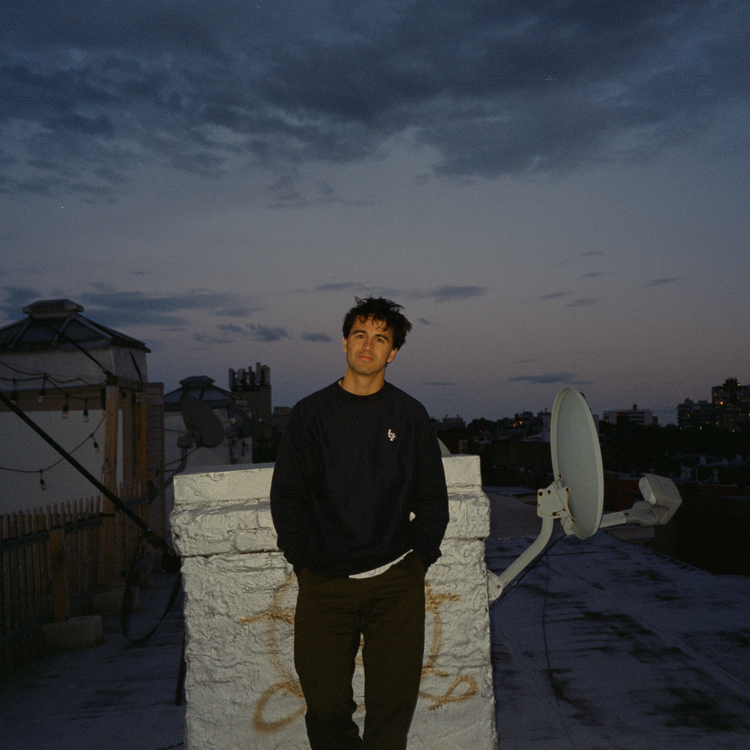
How did Young Guns get on your radar?
Whether it’s a photographer, graphic designer, or art director, it’s their voice that draws me in. It’s hard to grasp that from a single piece of work, but when you look across a body of work, you start to see what makes them who they are.
I see such distinct perspectives in the portfolios of the past Young Guns winners. It feels like a rite of passage for the creatives who’ve shaped my work. I can’t remember when I first heard about it, but just hoped I would get there someday. Feeling damn lucky to be a part of it — and to have a platform that showcases our generation’s creative voices.
How did you end up in the creative field?
I grew up in Kimberley, BC — a one-stoplight town in the Canadian Rockies. Film and photography were my passion, but I wasn’t sure they were realistic career paths.
One night, I cold-messaged Jimmy Chin on Facebook. I sent him my reel and asked whether I should attend university pursuing a stable career or a life in film. The next morning, I woke up to his response. I still have it printed out.
He said maybe it wasn’t as big a fork in the road as I thought. This path requires so many skills and experience beyond those you find behind a camera: communication, selling ideas, and lived experiences you draw from.
So there I was, entering my second year of Sciences, trying to convince a professor to reschedule my mid-term due to a week-long shoot. It became clear where I wanted to focus, and I quit university and went full-time freelance.
At 23, I was one of the youngest directors in Canada to sign with a commercial production company. I quickly learned how valuable skills like pitching, communicating with large crews, and selling ideas are. And I realized that if my work is ever going to say something, I need to have a life outside of being on set.
It’s been nearly 15 years since that Facebook message. It seems the more I absorb in life, the greater the chances are that I can create work that’s honest and emotive. Even the night my old roommates argued, and by morning their photo together was gone from the fridge — my mind went straight to: that moment belongs in a film.
I feel I’m just at the beginning of my career, and I hope to have just as many questions — and still be pushing — another 15 years from now.
“If my work is ever going to say something, I need to have a life outside of being on set.”
Why did you decide to enter this year?
I almost held off on applying since I had one more year of eligibility and thought I might be able to make something stronger.
I pour a lot of myself into every project, and this year I figured I’d see how people responded to the work. I had zero expectations of making the finals, let alone winning.
You only get to submit six projects. How did you decide what made the cut?
I still feel “the gap” between the work I’ve done and what I think I’m capable of. I can become pretty obsessed with the projects I’m working on. It can infuriate me, but it would be sad to lose that feeling that I could make something better.
WIP and Close to Home are my most recent personal projects — the closest to what I’d call “me.” I poured a lot of myself into them. I’m proud of them because, at the time, I gave those everything I had.
For example, WIP — I directed, shot, and edited it. I walked over 600km through NYC, and everyone in the piece was once a stranger who I approached on the streets. That led to moments like kids in Queens taking me to the roof of their apartment complex to see the sunset over the Manhattan skyline, and a man in Wall Street instantly diving into his thoughts about the afterlife before jumping on a Zoom call.
The remaining four commercial projects are all milestones in my career — like the Mercedes spot I made when I was 22. The agency saw my short film that won Vimeo Staff Pick and was on a festival circuit. I poured my entire rate into the project. Next thing you know, I’m in Chile and Argentina with a G-Wagon.
I’m pulling focus and driving a tiny stick shift rental car while one of my best friends (Chris Clark — YG23) is hanging out of the trunk with a climbing harness and camera.
“I walked over 600km through NYC — and everyone in the piece was once a stranger I approached on the streets.”
What was your reaction when you found out you won?
I was taking the G train when I saw the email come in. I had to reread it a few times because I thought there was no way I’d actually won. It’s surreal.
It’s been a goal of mine for years, but it’s one I’ve almost been shy about — I didn’t want to feel like I let myself down if I didn’t get it by the time I was 30. I know I was supposed to keep it hush, but I have to admit I texted my girlfriend and family instantly about it. Tried to fight back the smiling and hopped off at Greenpoint to call my parents.
In what ways does where you’re living right now inspire your creativity?
I’m nearly three years into living in NYC. I’m from Canada, and it hasn’t been easy to get here: I had to sort out the work visa, rebuild a network, and start over personally after moving without knowing many people.
With my visa, I’m only permitted to work as a Photographer and/or Director. So it’s extremely committing — but with that commitment comes clarity. I’m dead-set on living in NYC and pursuing this career.
Almost every day there are fleeting moments — like a family singing ‘Happy Birthday’ in Polish over FaceTime outside my local grocery store, and a random dude walking down the sidewalk jumping into their group and singing it as well. Then they part ways, and life moves on. Those moments, even if just a few seconds, I always have a beat where I think: damn, I’m lucky to be here. Then I go and buy a cortado for $9.
Name a dream project you’d love to do next. Who would you want to collaborate with?
My goal is for the feelings and themes in my personal work to inspire editorial projects and campaigns. If someone were to look at my ongoing stills series Close to Home, maybe the subjects of community, angst, and distance would resonate with them and elevate their project.
I’ve been working on Close to Home for years, and I want it to stand the test of time. I take multiple trips a year to shoot in my hometown, and if I finish a trip with one strong image, it feels like a success. I hope this becomes my first published monograph by my mid-30s — something I can look back on decades later and still be proud of.
For years, I’ve wanted to make a film that takes me across Canada. I kept postponing it — sometimes because of commercial jobs, other times because it felt like I needed to think it through further. Before I knew it, another year had passed without starting.
All my personal projects start with a bit of hope and a mountain of doubt, and the only way through it is to head out and start. This year, I bought an old 16mm camera and finally began the Canada project. I’m planning a longer trip this summer to see where it leads.
What matters to me is that through my life, I continue making personal work that is an evolution from the last. I never want to repeat myself. I want to be 60, not knowing all the answers and still setting out trying to make something I’m proud of.
Learn More About Young Guns


